Automotive Technician
PROGRAM OVERVIEW
AUTOMOTIVE TECHNICIAN
PROGRAM LENGTH: 2-4 years
GRADES: 9-12
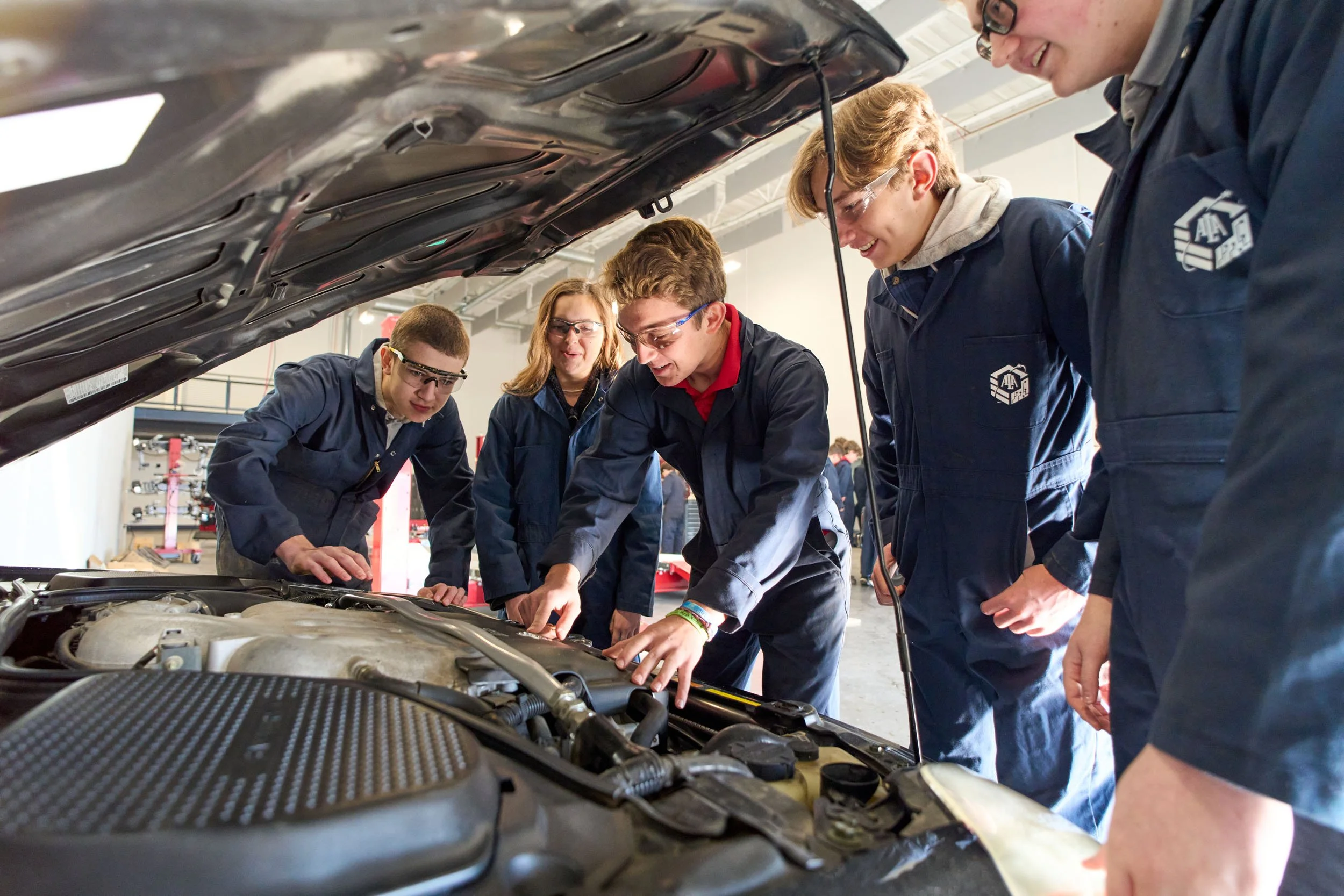
The Automotive Academy at ALA Applied Technologies is built for students who want to understand how vehicles work, how to diagnose problems correctly, and how to repair and maintain modern cars and light trucks. It’s a two to four-year program designed to prepare students to earn multiple industry certifications in vehicle repair and maintenance, while building real shop habits: safety, precision, documentation, and professional responsibility.
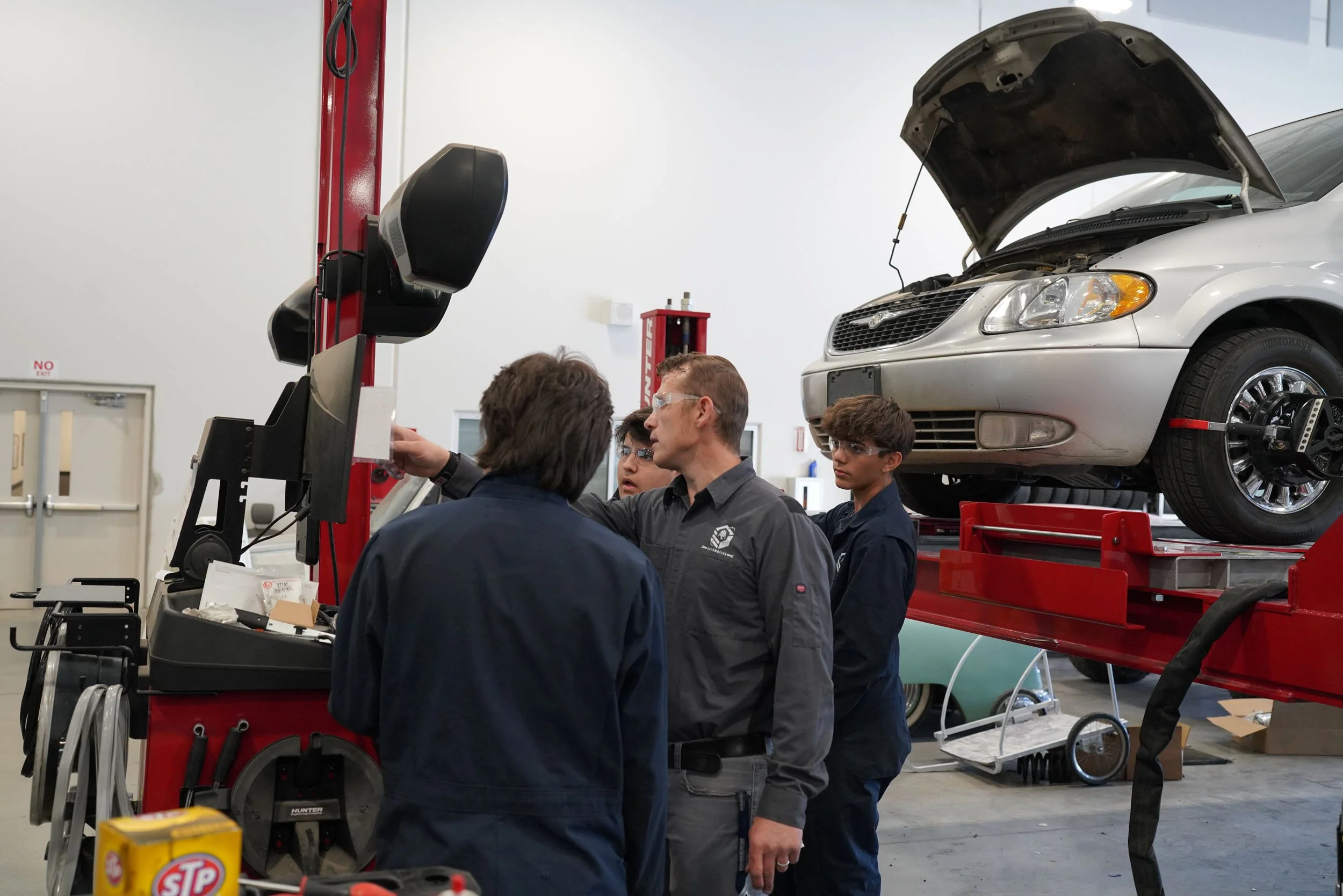
Students begin with safety, shop equipment and tools, vehicle subsystems, service publications, and basic maintenance, then progress into inspections, diagnostics, and deeper repairs using industry-standard test equipment—like ECU scan tools, alignment equipment, and advanced engine performance diagnostic tools.
By the end of the program, students will learn skills in:
- Shop safety, procedures, and professional responsibilities
- Preventive maintenance and standard inspections
- Brakes, steering, suspension, and drivetrain fundamentals
- Engine repair and engine performance basics
- Manual and automatic transmission systems
- Electrical systems diagnostics
- HVAC systems in vehicles (automotive A/C and heating)
- Using professional diagnostic and service tools (scan tools, alignment equipment, advanced diagnostics)
Questions about Registration?
✉ districtregistrar@alaschools.org
Course Pathway Map
This is a two semester course. This course is a theoretical introduction to the automotive industry including safety practices, shop equipment and tools, vehicle subsystems, service publications, professional responsibilities and basic automotive maintenance. Students will be introduced to automotive systems for the general public/consumers. Students in this program will work towards ASE Entry Level certifications in the following areas: Engine Repair, Brakes, Maintenance & Light Repair, HVAC, Engine Performance, Automatic Transmission, Suspension, Manual Transmissions, Differentials, and Steering. Students will also practice skills learned in the practical lab portion of the course. Students who successfully complete necessary components to receive ASE certification may be eligible for college credit through the Maricopa Community College system.
In this course students will continue the theoretical exploration of automotive systems. Students will understand standard inspections, maintenance and repair of: HVAC, Auto Transmission, Manual Transmissions, Engine, Steering and Suspension and Electrical systems in a lab based curriculum. Students will train to use industry standard automotive service and test equipment such as ECU scan tools, computerized wheel alignment equipment and wheel mounting equipment, and advanced engine performance diagnostic equipment. Students in this program will practice essential skills for ASE certification: Entry Level-Engine Repair, Brakes, Maintenance & Light Repair, HVAC, Engine Performance, Automatic Transmission, Suspension and Steering. Students who successfully complete the course while enrolled in a partner community college will also receive corresponding college credit.
In this course, students will prepare for taking the ASE national tests, entering advanced automotive training programs, and working in entry level automotive positions. Students will participate in authentic learning experiences in which they will provide a service to an organization or business. Students in this program will test for ASE certifications: Entry Level-Engine Repair, Brakes, Maintenance & Light Repair, HVAC, Engine Performance, Engine Performance, Automatic Transmission, and Suspension and Steering. Advanced ASE certification in business operations, hybrid and alternative fueled vehicles will be available for students who meet ASE entry level standards. Students who successfully complete necessary components to receive ASE certification may be eligible for college credit through the Maricopa Community College system. Students will also practice skills learned in the hands-on lab portion of the course.
In this course, students will be provided additional classroom lab time or on-the-job training for extended hands-on experiences. These real world, authentic activities reinforce the workplace skills necessary to master Automotive Technologies. Internship students will experience on-the-job training in a career path. Requirements include three weeks of classroom instruction in job preparation and application and 120 hours of on the job field work. Artifacts include a portfolio, two employer evaluations, two instructor field evaluations, a final, written summary and reflection. Students must provide their own transportation to the internship site.
This is a two semester course. The Empire Go Big internship program is an opportunity for students to receive Caterpillar equipment technician training from Empire Southwest professionals. Students selected for this program will receive on-the-job training and accelerate their future in diesel technologies. The first semester is composed of classroom instruction and laboratory time in the Empire training facility. The second semester is spent interning with Empire employees in several different shop environments where students learn first-hand in a professional environment with real world examples.
In this course, students will design a project using the fundamentals of project management, conduct research on their topic of interest, then produce a final written report, portfolio, or a presentation that summarizes and demonstrates student learning. The capstone project will relate to academic accomplishments and demonstrate mastery of the subject.
For the most accurate and up-to-date information regarding course offerings, requirements, and descriptions, please refer to the official course catalog.
Certificates & Licenses
Throughout each course, students work toward Automotive Service Excellence (ASE) Entry-Level certifications.The ASE entry-level certification tests are designed to show the knowledge and skills of students who are preparing for a career in the automotive service industry. In Applied Tech, students will work toward these entry-level certifications, with most students testing in Year 3 (Automotive Technologies III). However, students may choose to test for these skills earlier.
Automotive Technologies III includes advanced options for students who meet ASE entry-level standards, including pathways connected to business operations and hybrid/alternative fueled vehicles.
Students who complete the required components for ASE certification may also be eligible for college credit through the Maricopa Community College system.
| Certificate Name | Class / Year Obtained | Type | Purpose / Eligibility | Information Covered |
|---|---|---|---|---|
| ASE Entry-Level Certification: Engine Repair | Automotive Technologies III | Test | Entry-level automotive technician eligibility | Fundamentals of engine repair and diagnostics |
| ASE Entry-Level Certification: Brakes | Automotive Technologies III | Test | Entry-level automotive technician eligibility | Brake system maintenance, repair, and diagnostics |
| ASE Entry-Level Certification: Maintenance & Light Repair | Automotive Technologies III | Test | Entry-level automotive technician eligibility | Routine maintenance, inspections, and light repair procedures |
| ASE Entry-Level Certification: HVAC | Automotive Technologies III | Test | Entry-level automotive technician eligibility | Heating, ventilation, and air conditioning systems in vehicles |
| ASE Entry-Level Certification: Engine Performance | Automotive Technologies III | Test | Entry-level automotive technician eligibility | Engine diagnostics, performance testing, and tuning basics |
| ASE Entry-Level Certification: Automatic Transmission | Automotive Technologies III | Test | Entry-level automotive technician eligibility | Automatic transmission inspection, repair, and maintenance |
| ASE Entry-Level Certification: Suspension & Steering | Automotive Technologies III | Test | Entry-level automotive technician eligibility | Suspension and steering system maintenance and troubleshooting |
Career, Salary, and Growth Opportunities
Entry
Median
Experienced
ANNUAL SALARY
2024
2034
PROJECTED JOB OUTLOOK
2016
2024
2034
EMPLOYMENT GROWTH (by %)
Automotive careers continue to evolve as vehicles become more computerized, increasing demand for technicians who can diagnose systems, use scan tools, and follow digital service information. Roles across automotive service, diesel repair, heavy equipment, and collision repair offer strong earning potential, with salaries commonly ranging from about $45,000 to over $81,000 depending on specialization and experience.
Nationally, automotive service technicians earn a median pay of about $49,670 per year, with approximately 70,000 openings projected annually through 2034 and steady growth of about 4 percent. Diesel technicians and heavy equipment mechanics often earn higher median wages, ranging from about $60,000 to $62,000, with consistent demand driven by transportation, construction, and infrastructure needs. In Arizona, automotive service technicians earn a median wage of about $48,360 per year, with average earnings around $53,550. For students interested in diagnosing problems, working with modern vehicle technology, and building practical technical skills, automotive careers provide a dependable pathway to stable, in-demand opportunities.
*Statistics sourced from U.S. Bureau of Labor Statistics (BLS) and Arizona workforce projections.
Our Facilities
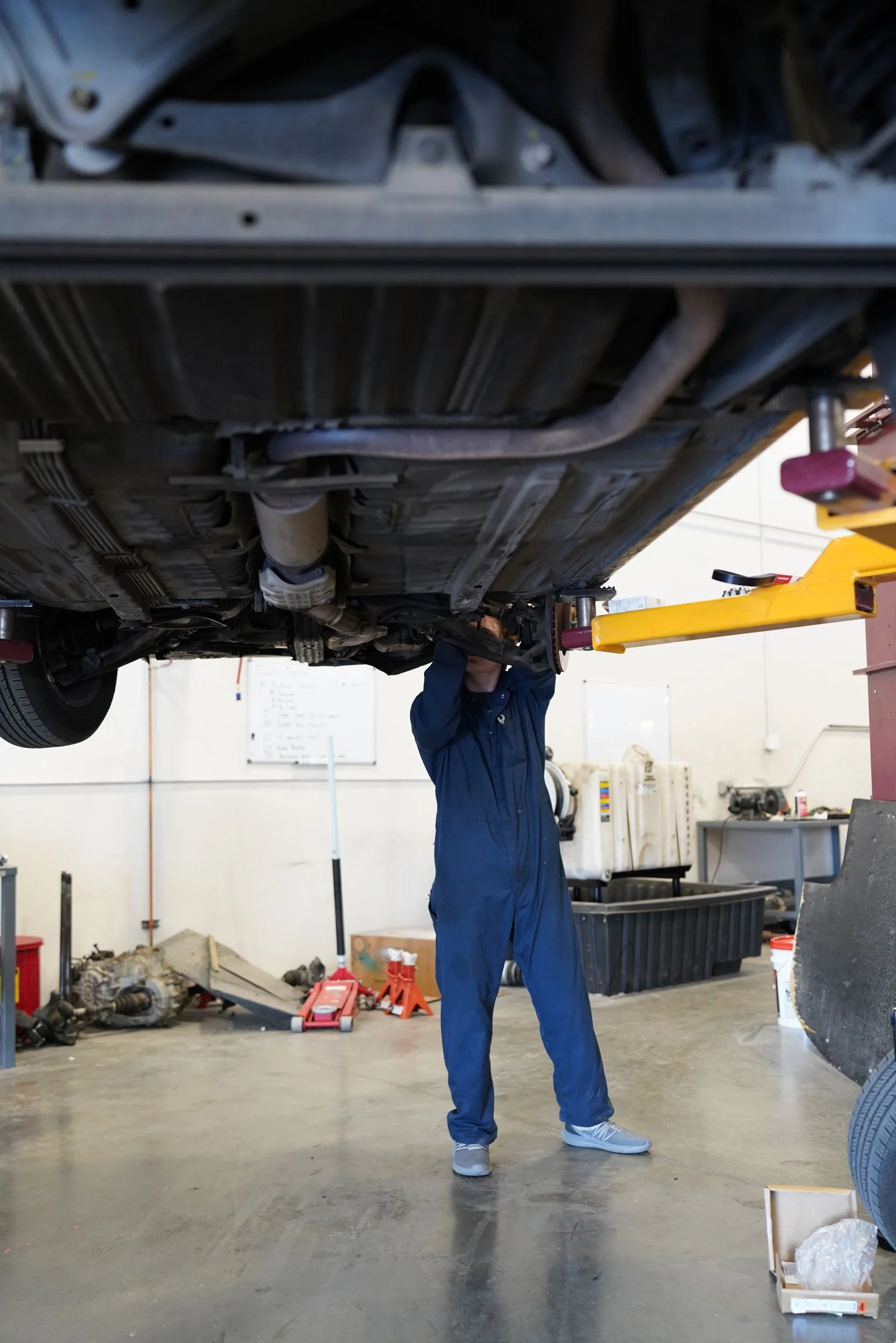
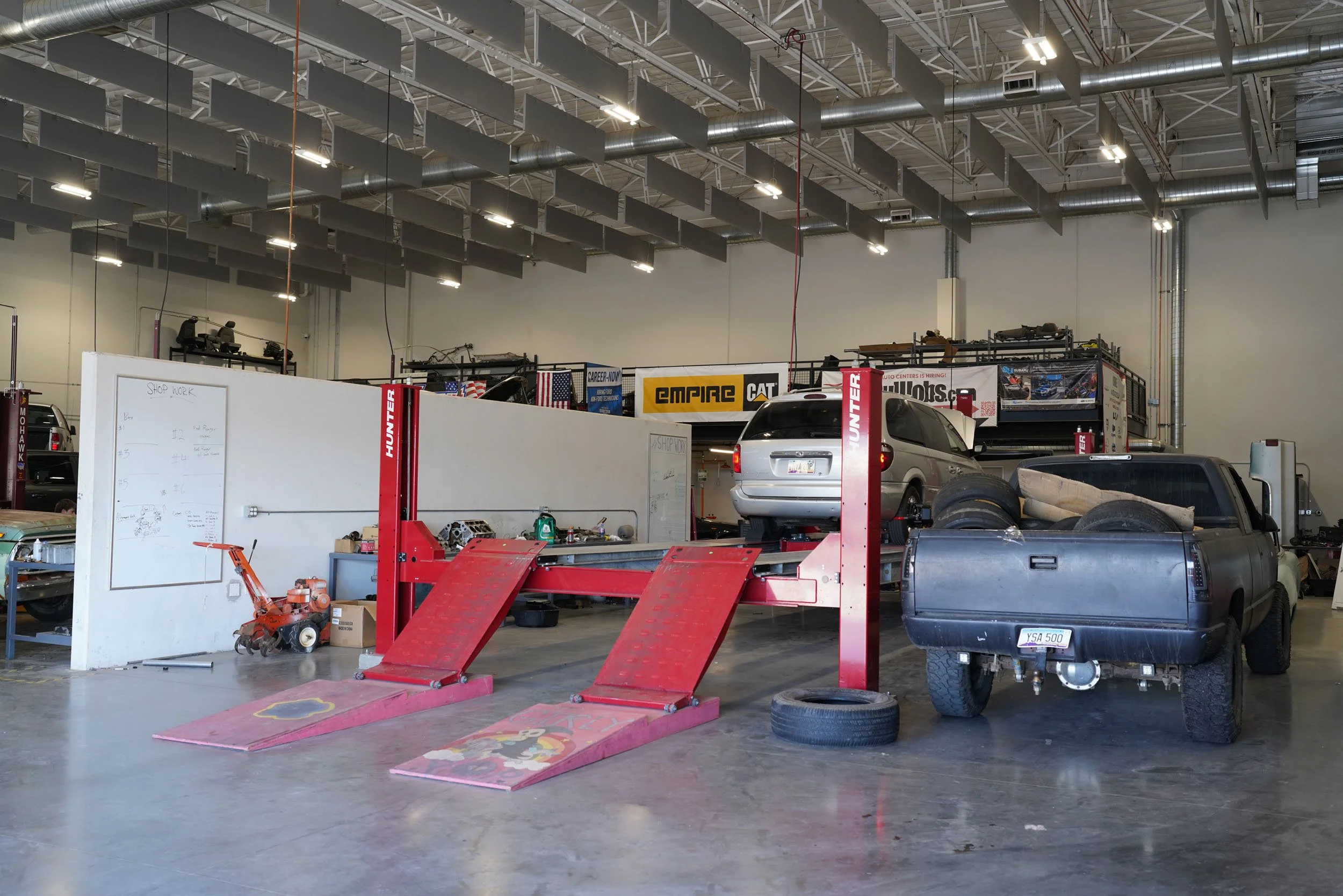
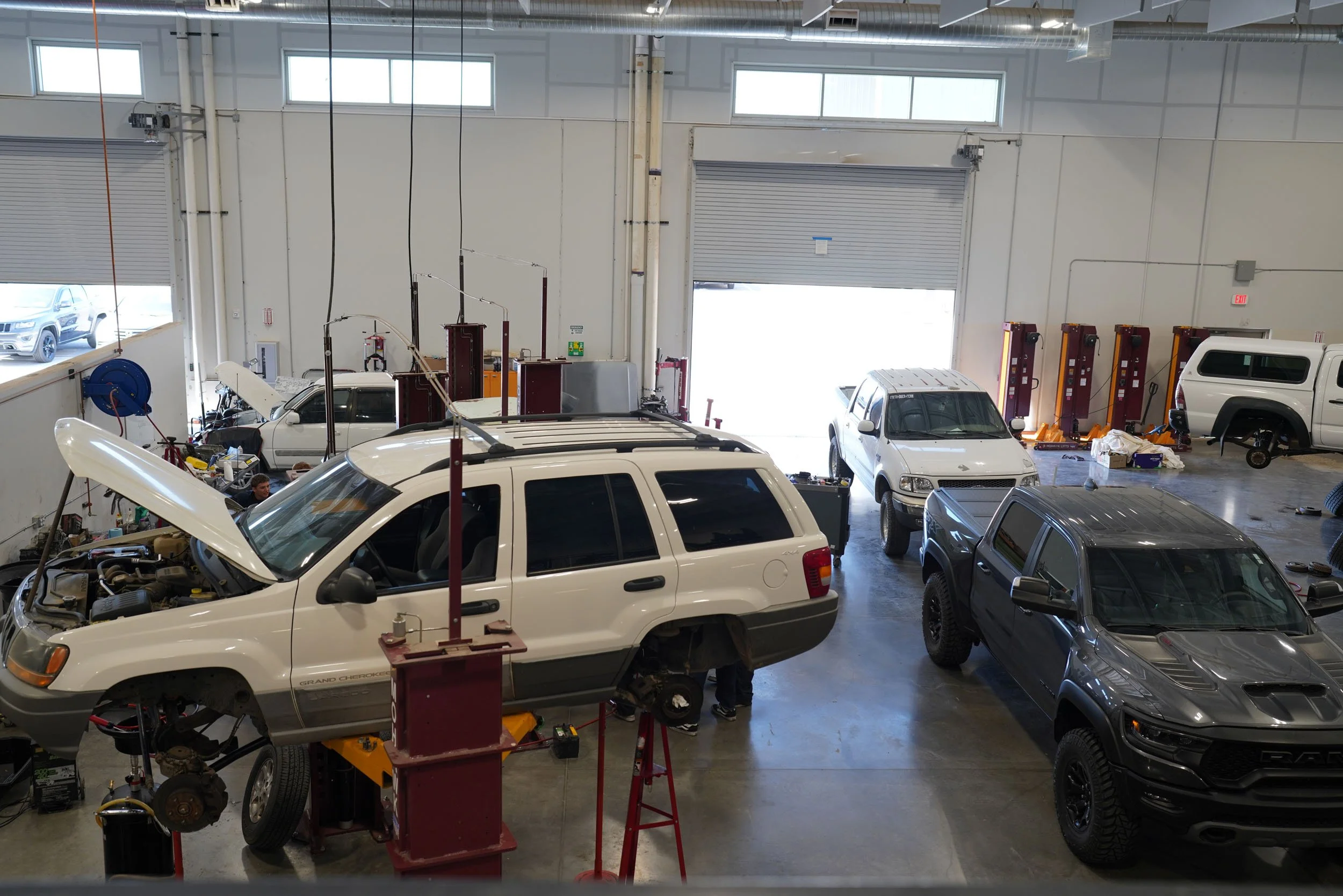
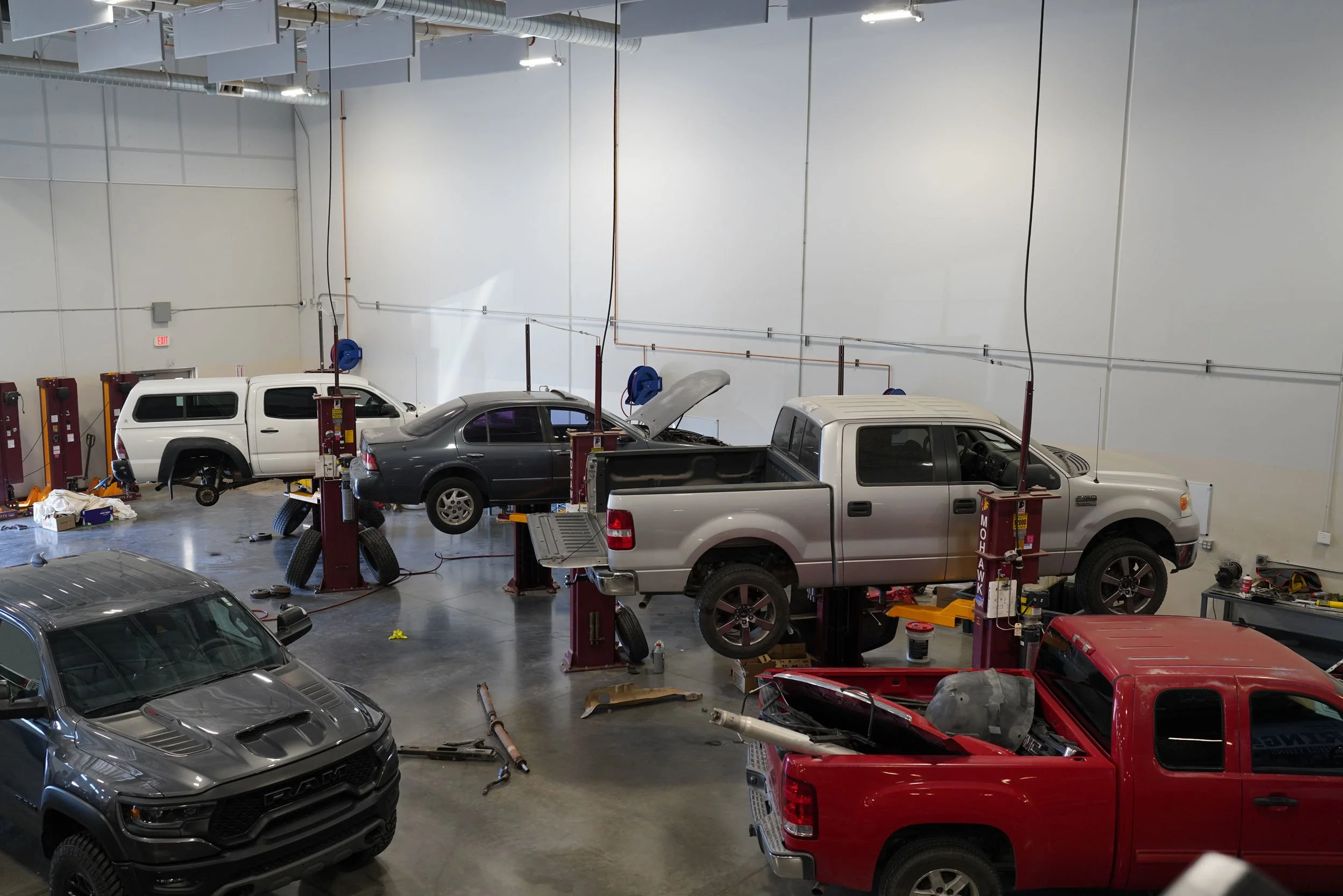
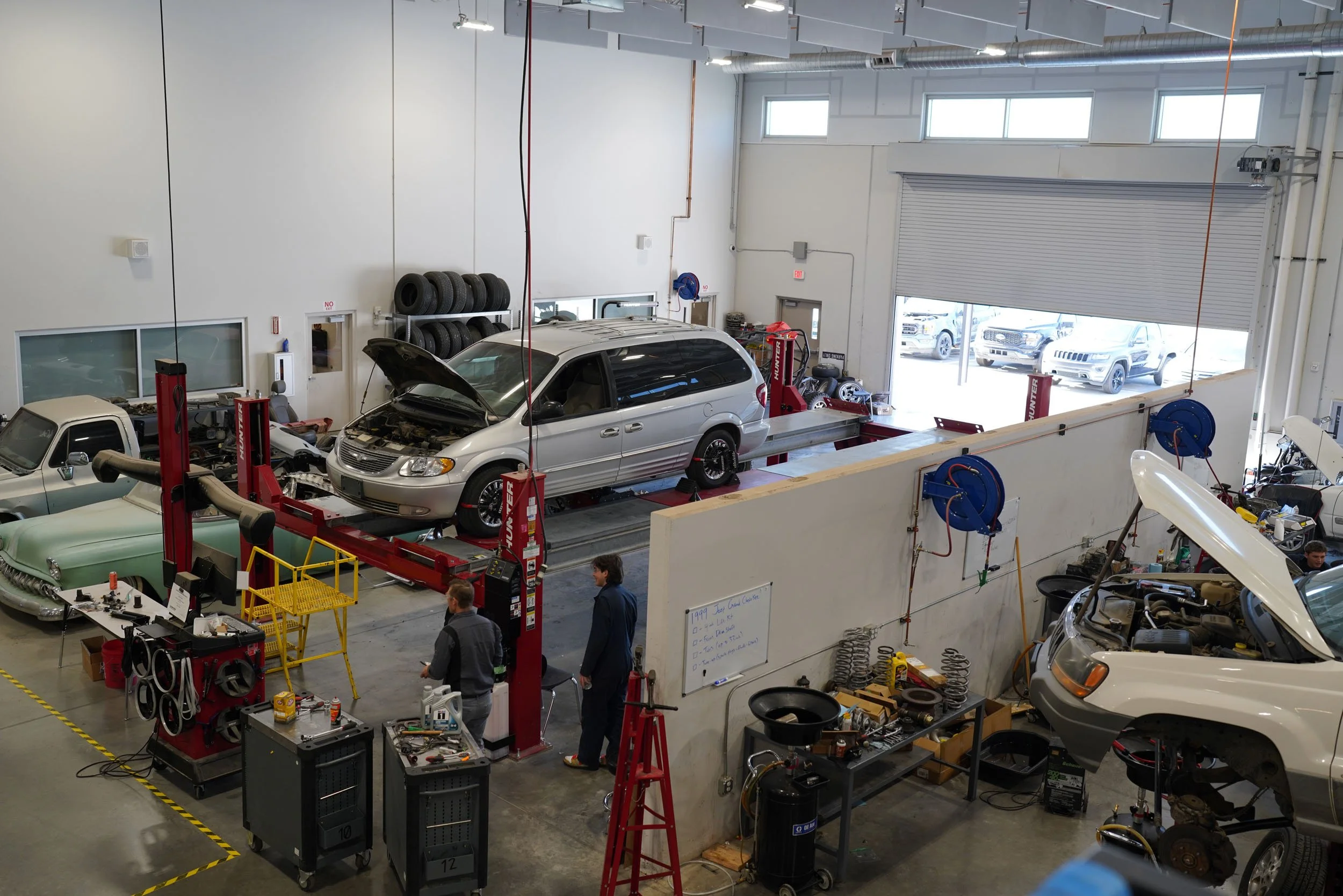
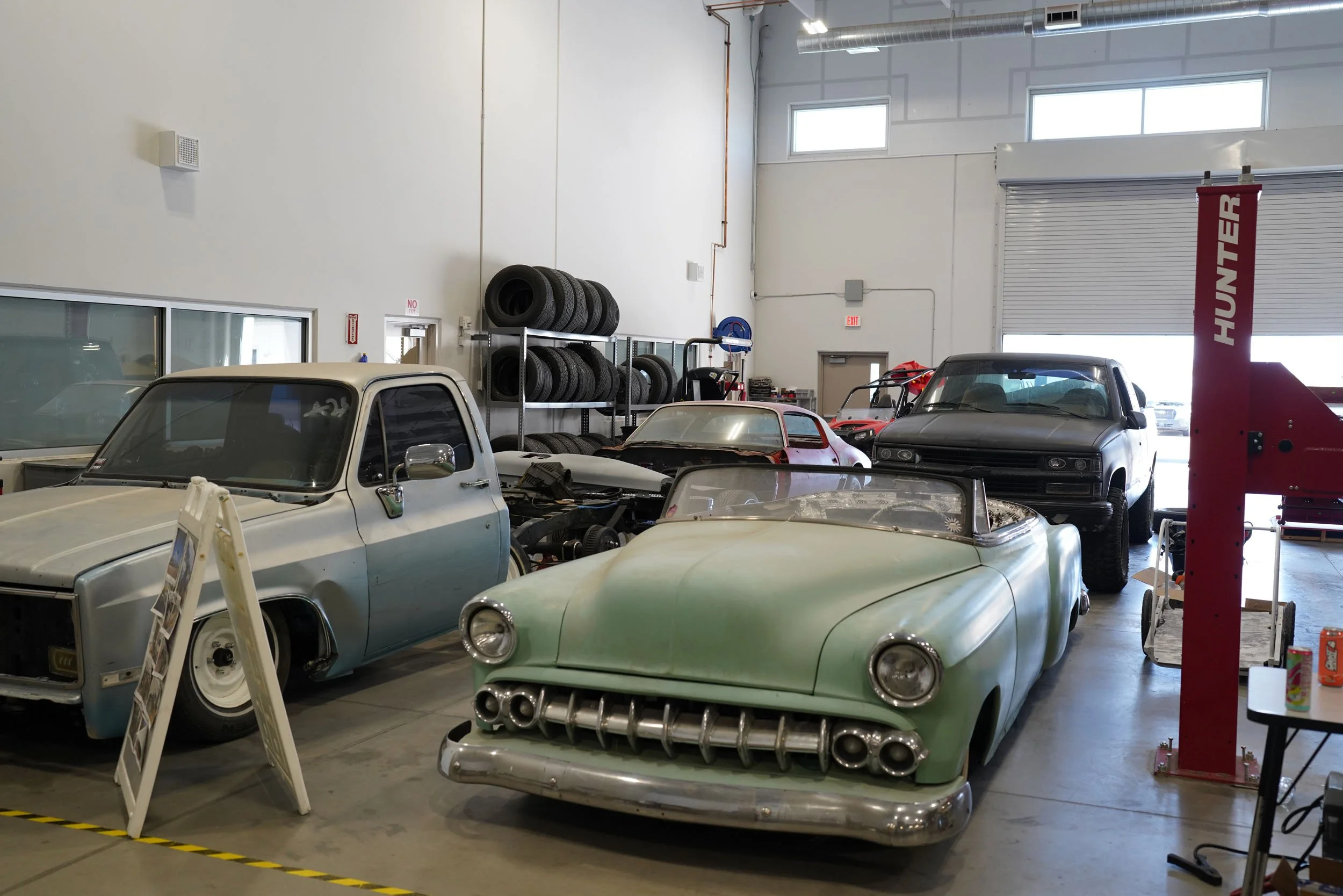
Our students train in a fully equipped, 10,000-square-foot automotive shop designed to mirror a real-world professional environment. With advanced tools and modern equipment, students gain real world experience using the same technology found in today’s industry.
Our facilities feature:
4 heavy-duty 10,000 lb lifts and 2 additional 12,000 lb lifts
A Hunter scissor lift alignment machine for precision work
Sonic toolboxes for organized, professional-grade tooling
Diagnostic scan tools used in today’s vehicles
A Robinair A/C Freon recovery and recharge machine
Two large bay doors for full shop functionality
We’re also proud to partner with NAPA Auto Parts and Carlyle Tools, providing students with access to industry-recognized equipment.
Automotive Services
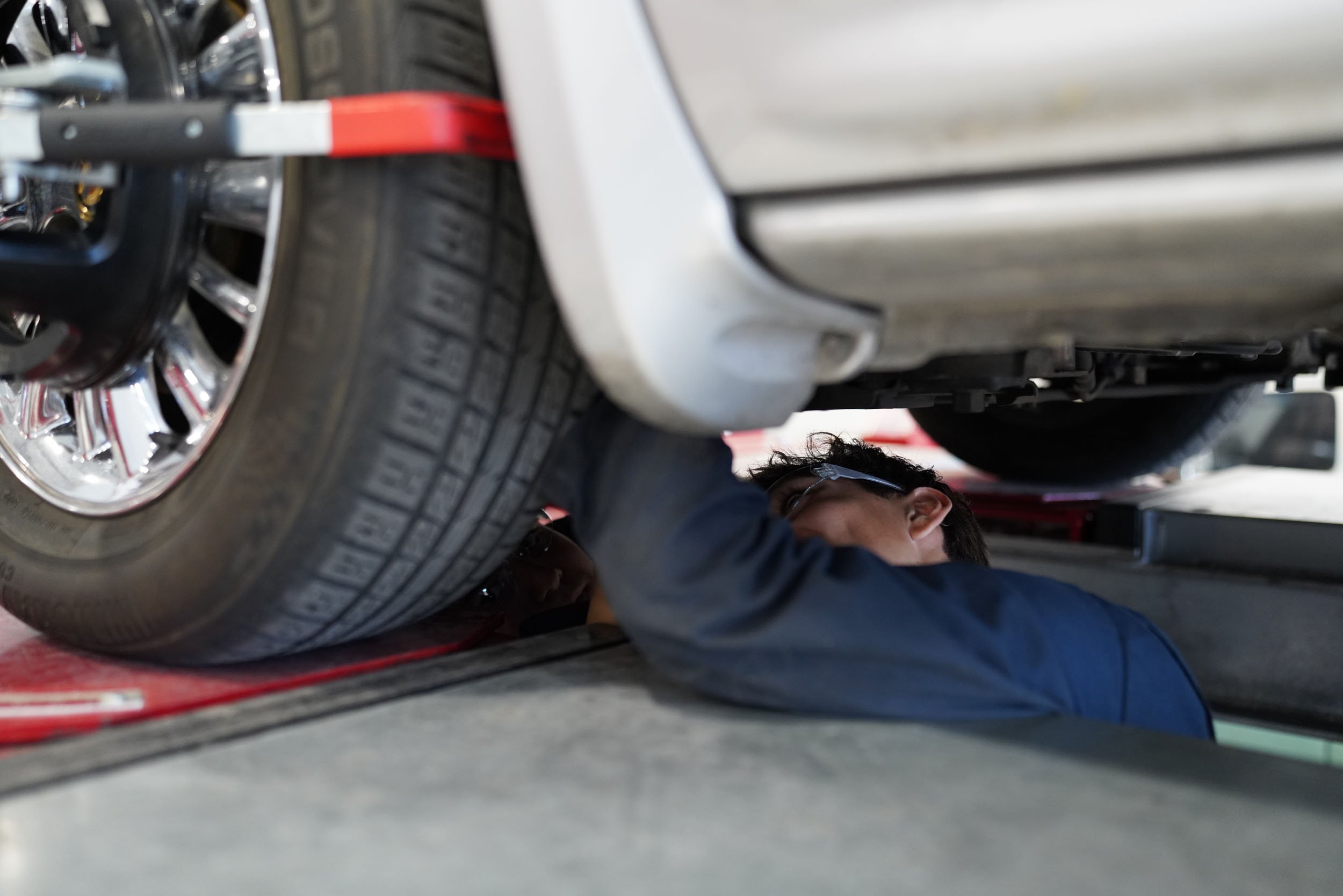
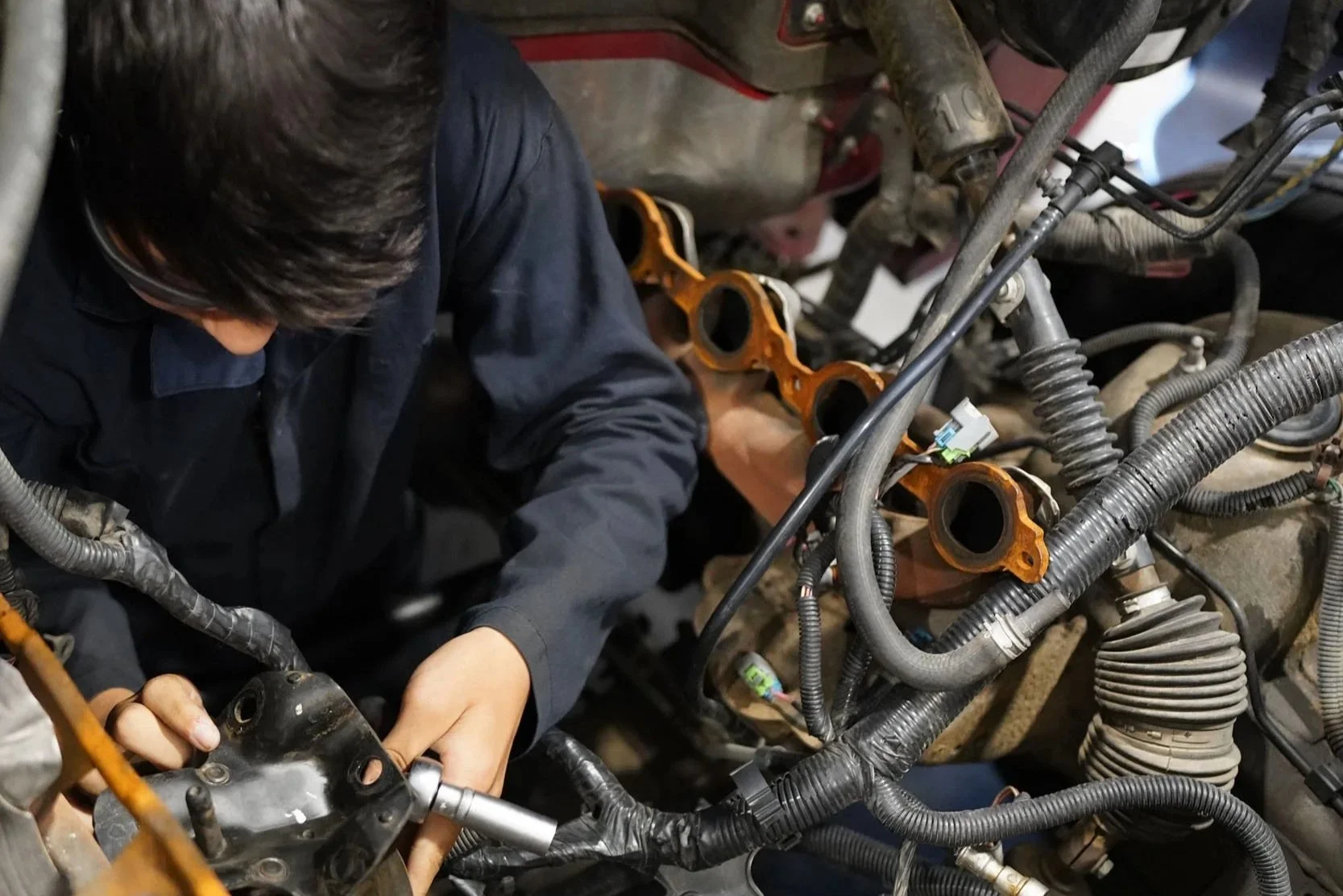
Our student-run automotive shop supports a range of services from routine maintenance to basic diagnostics, allowing students in the Automotive Technician pathway to apply classroom knowledge to real-world situations. Work is completed by academy students with guidance from experienced instructors, helping them build confidence and develop skills in an environment that reflects modern automotive workplaces.
Frequently Asked Questions (FAQ)
-
Students learn safety, tools, service information, maintenance, inspections, and diagnostics—then apply those skills in the lab using equipment like ECU scan tools, alignment equipment, and advanced diagnostic tools.
-
No. Automotive Technologies I starts as an introduction and builds from fundamentals.
-
Students work toward ASE Entry-Level certifications across key categories like brakes, maintenance/light repair, engine repair, engine performance, HVAC, transmissions, steering/suspension, and more.
-
Yes. Automotive II: Custom & Restoration covers the process from start to finish and includes fabrication, performance drivetrain, paint/body, interior, wiring, wheels/tires, and intro to CAD and 3D printing.
-
Yes. Students can take an Apprentice/Internship course with job prep plus 120 hours of field work, and they build a portfolio and evaluations.
-
The Empire/CAT Go Big Capstone offers Caterpillar equipment technician training with Empire Southwest professionals and accelerates toward diesel technologies.
Industry Partners
We collaborate with leading industry professionals to ensure our students gain real-world experience and direct pathways into high-demand careers. We are proud to work alongside organizations that invest in the future of our students.