Aviation Maintenance
PROGRAM OVERVIEW
AVIATION MAINTENANCE
PROGRAM LENGTH: 4 years
GRADES: 9-12
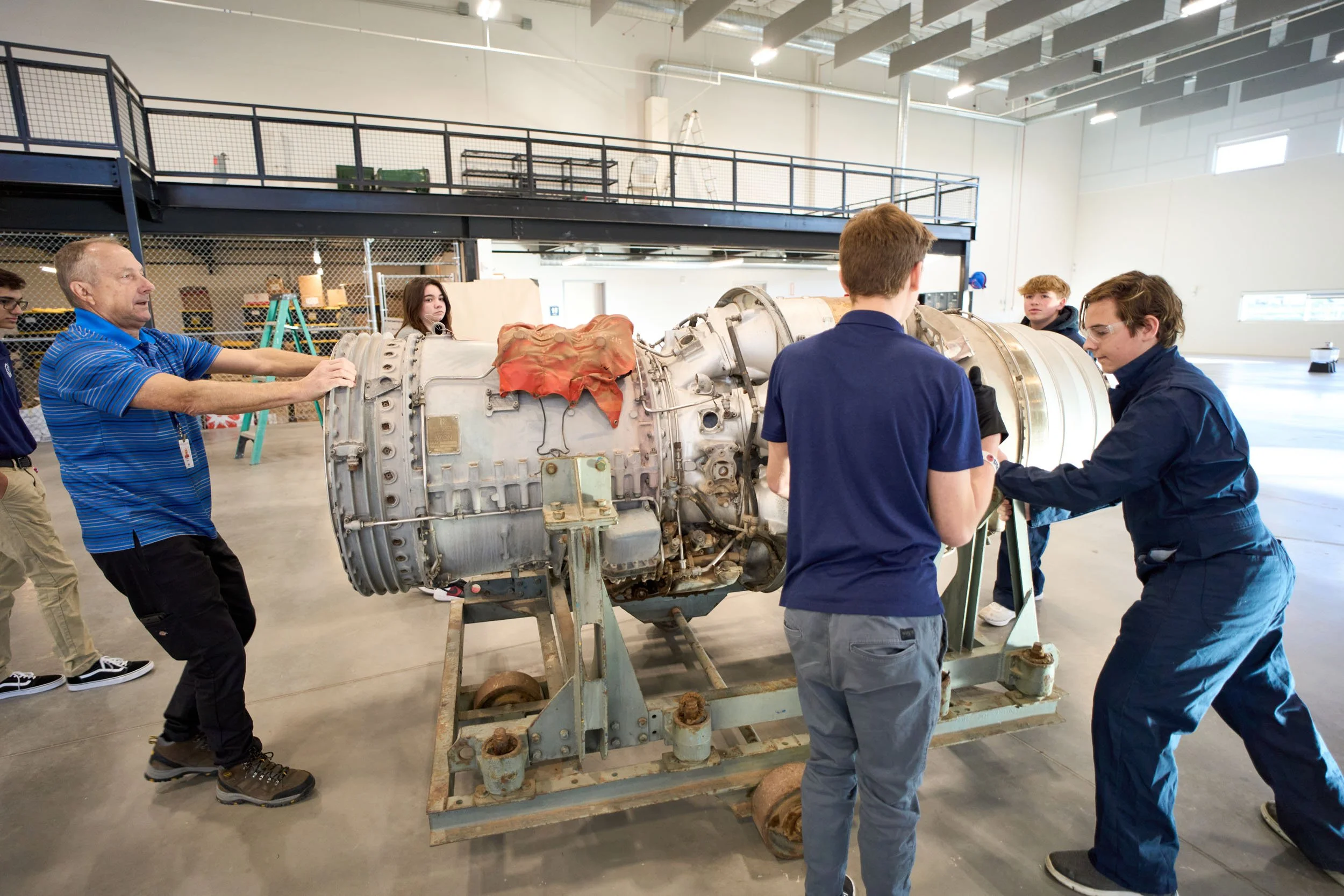
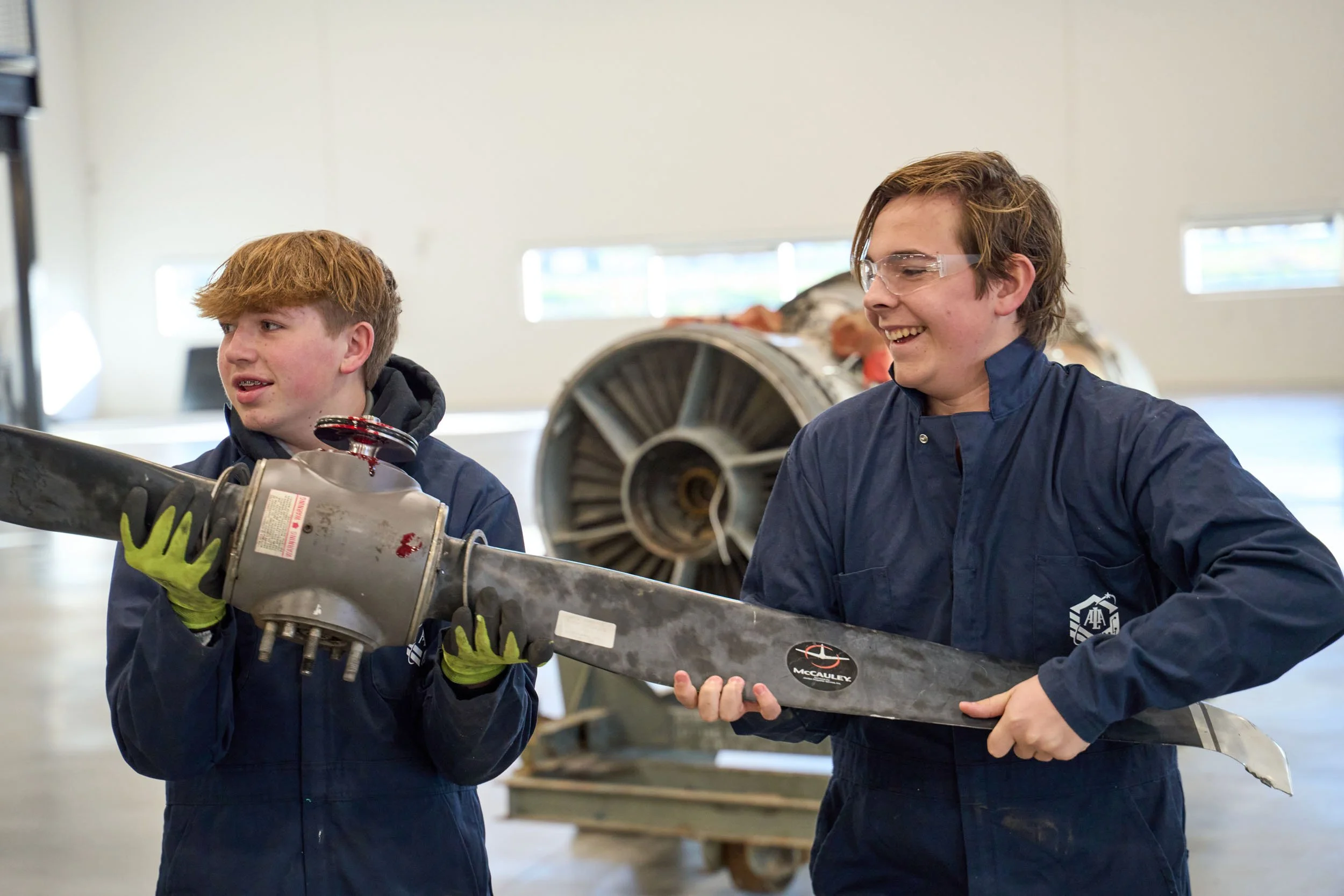
The Aviation Maintenance Pathway is for students who want to learn how aircraft are inspected, serviced, documented, and repaired. This is high-accountability work where safety, precision, and professionalism are non-negotiable. Students complete both the classroom course and the matching lab course as part of the program.
This is a four-year sequence designed to prepare students toward FAA certificate directions based on the student’s academic situation: Airframe (A), Powerplant (P), or Airframe & Powerplant (A&P).
By the end of the program, students will learn skills in:
- Safety procedures, shop professionalism, and maintenance documentation
- Correct tool use, tool accountability, and precision measuring
- Servicing and ground operations
- Weight and balance basics and inspection thinking
- Aerodynamics using applied physics and math
- Electrical theory and systems (batteries, generators, motors, regulators, circuit protection)
- Aircraft systems work as they advance (fuel, oil, hydraulics, environmental control)
- Inspection, maintenance, and troubleshooting across landing gear, flight controls, navigation, flight instruments
- Engine/powerplant concepts (reciprocating and turbine engines), troubleshooting, and overhaul fundamentals

Course Pathway Map
This course introduces students to the operational and scientific nature of the aviation maintenance industry. Areas of emphasis include safe work habits, proper use of tools and precision measuring devices, aircraft hardware, servicing procedures, ground operations, weight and balance, and documentation of maintenance and inspections.
Students explore aerodynamics through physics and math concepts and learn electrical theory including magnetism, batteries, generators, motors, voltage regulators, and circuit protection devices. Instruction emphasizes accountability, integrity, professionalism, and practical lab applications.
This course builds on Aircraft Mechanics I with a focus on airframe structures and aircraft systems including fuel, oil, hydraulic, and environmental control systems. Students learn inspection, maintenance, and troubleshooting principles applied to landing gear, flight controls, navigation, and flight instruments.
Instruction emphasizes FAA standards for accountability, integrity, and professionalism. Students demonstrate learning through hands-on lab projects and practical applications.
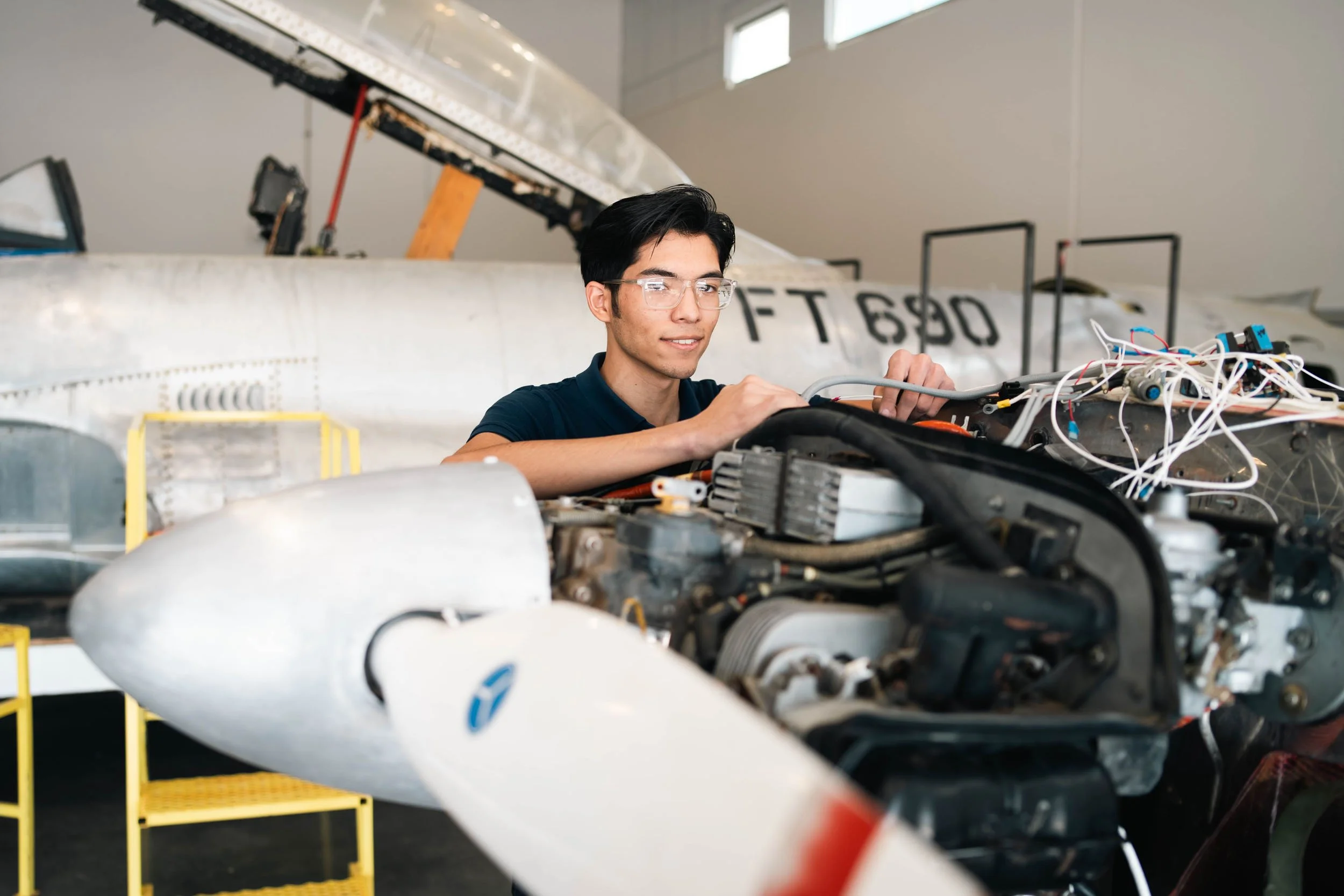
This course focuses on aircraft powerplant systems and builds upon knowledge gained in previous courses. Students study reciprocating and turbine engines used in general aviation and commercial aircraft.
Emphasis is placed on engine inspection, maintenance, troubleshooting, and overhaul principles. Students gain an understanding of how aircraft systems interact with engines to ensure proper operation. Learning is reinforced through hands-on lab projects and continued development of professional standards.
This lab-only course prepares students for FAA certification pathways (A, P, or A&P). Students refine advanced techniques, safety procedures, tool selection, maintenance documentation, and use of technical publications.
The course provides a comprehensive review of skills from Aircraft Mechanics I–III and prepares students for FAA written exams, followed by the Oral and Practical exam with a Designated Mechanic Examiner (DME).
Students may participate in a structured internship program (1–2 years, depending on the company). Opportunities are limited and require application, interview, and adherence to professional standards. Internships include a minimum of 120 hours of work-based learning. Students receive Pass/Fail grades and may earn up to 2.0 CTE or elective credits throughout high school, with 0.5–1.0 credit per semester.
In this course, students will design a project using the fundamentals of project management, conduct research on their topic of interest, and produce a final report, portfolio, or presentation that demonstrates mastery of learning and academic achievement.
For the most accurate and up-to-date information regarding course offerings, requirements, and descriptions, please refer to the official course catalog.
Certificates & Licenses
The Aviation Mechanic certificate is issued by the FAA and includes two separate ratings: Airframe (A) and Powerplant (P). The Airframe rating focuses on the structural components of an aircraft, including the fuselage, wings, electrical systems, and landing gear, while the Powerplant rating covers aircraft engines and related systems such as fuel, ignition, and propellers. Students may choose to pursue one rating based on their academic path, or both. Earning both ratings is commonly referred to as an “A&P Certificate” and qualifies individuals to perform maintenance on the entire aircraft.
| Certificate Name | Class / Year Obtained | Type | Purpose / Eligibility | Information Covered |
|---|---|---|---|---|
| FAA Airframe (A) Certificate | Aircraft Mechanics IV with Lab | Written, Oral & Practical Exams | Allows certification to inspect, repair, and maintain aircraft structures and systems | Aircraft structures, electrical systems, hydraulics, landing gear, inspection procedures |
| FAA Powerplant (P) Certificate | Aircraft Mechanics IV with Lab | Written, Oral & Practical Exams | Allows certification to inspect, repair, and maintain aircraft engines and related systems | Reciprocating and turbine engines, fuel systems, ignition systems, propellers |
| FAA Airframe & Powerplant License | Completion of both Airframe and Powerplant Certificates | Written, Oral & Practical Exams | Full certification to work on all parts of an aircraft; required for most aviation maintenance careers | Comprehensive coverage of airframe and powerplant systems, inspections, maintenance procedures |
Career, Salary, and Growth Opportunities
Entry
Median
Experienced
NATIONAL ANNUAL SALARY
2020
2022
2024
AZ MEDIAN SALARY GROWTH
2024
2034
PROJECTED JOB OUTLOOK
Aviation maintenance careers focus on keeping aircraft and support equipment operating safely and efficiently. Roles such as aircraft mechanic, avionics technician, and airport ground support technician offer salaries ranging from about $40,000 to $105,000, with experienced professionals earning higher wages as they gain certifications and specialization. These careers also connect to broader aviation opportunities including airport operations, dispatch, air cargo, and longer-term pathways into piloting or engineering.
Nationally, aircraft and avionics mechanics earn a median pay of about $79,140 per year, with roughly 13,100 openings projected annually through 2034. Arizona wages are similar, with aircraft mechanics in the state typically earning in the upper-$70,000 range depending on employer and experience. For students interested in precision, safety, and technical problem-solving, aviation maintenance provides a dependable pathway to high-skill, in-demand careers across the aviation industry.
*Statistics sourced from U.S. Bureau of Labor Statistics (BLS) and Arizona workforce projections.
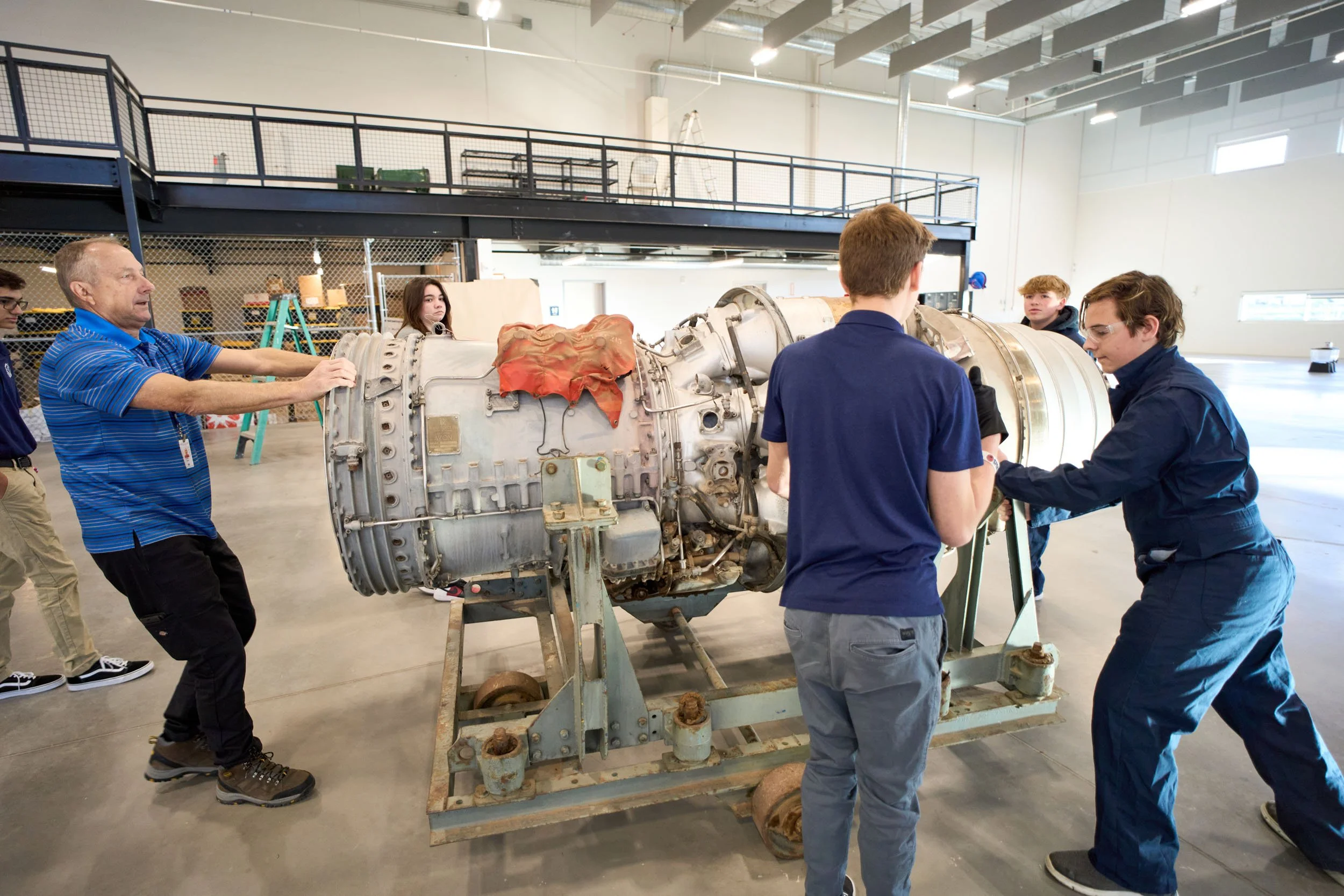
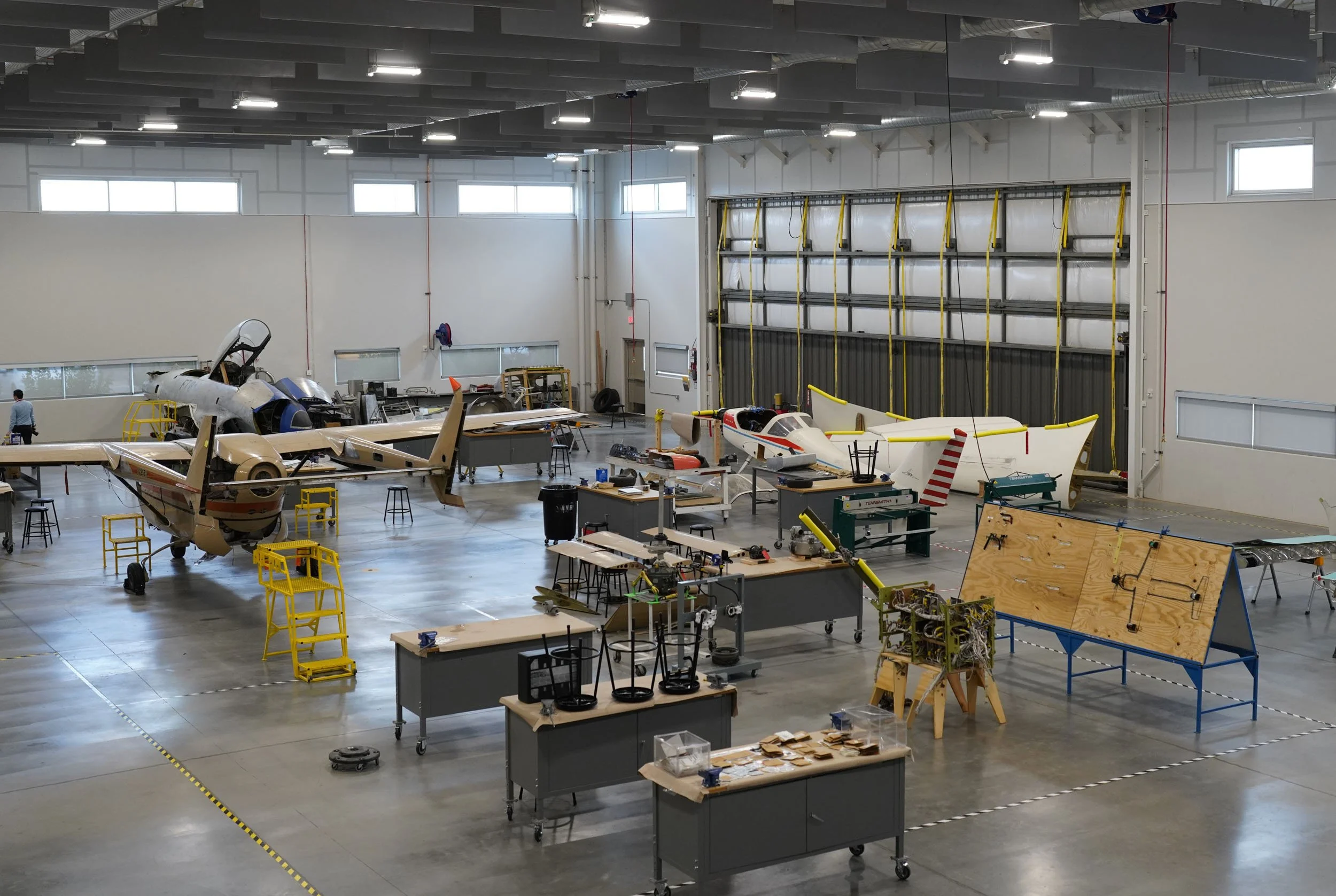
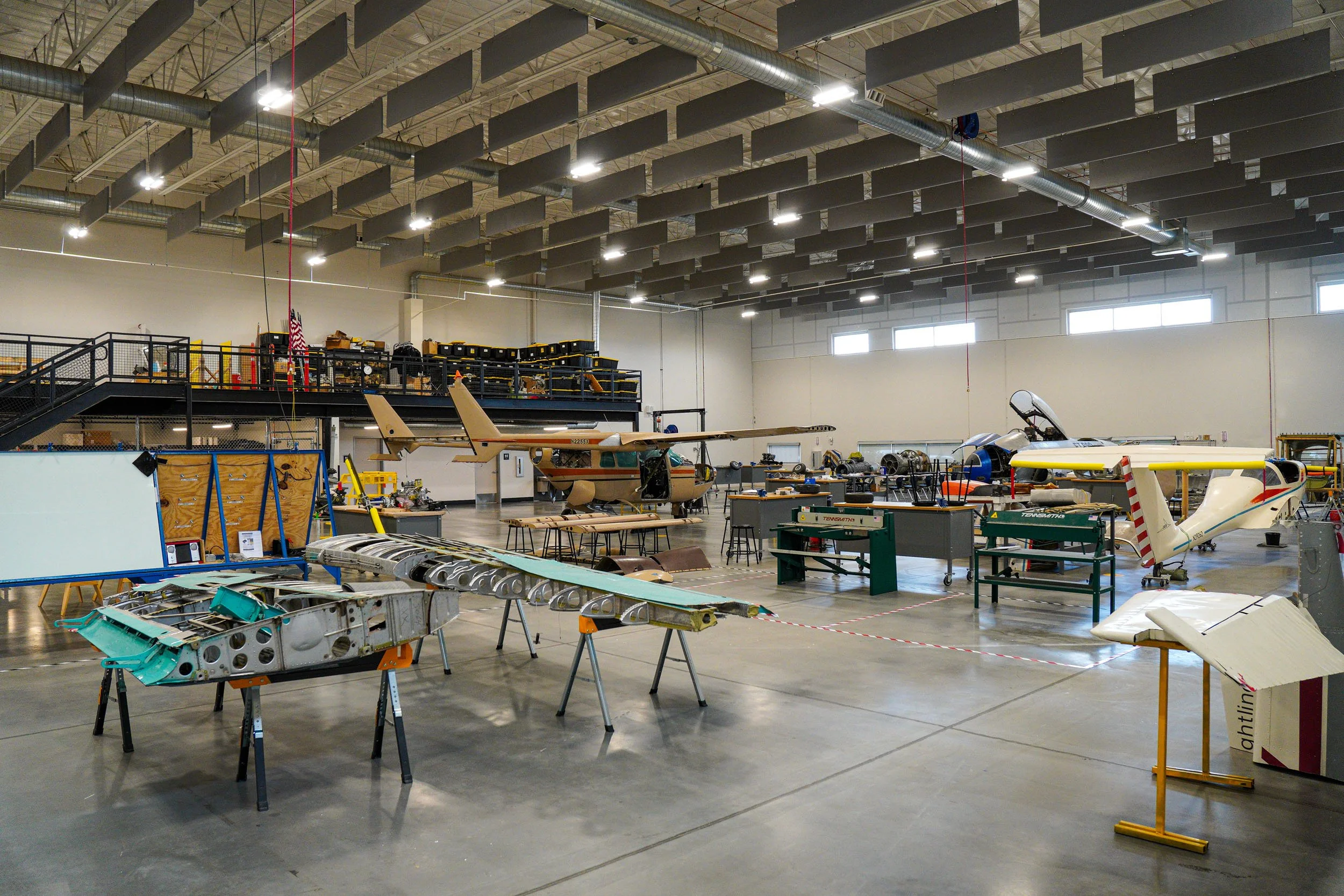
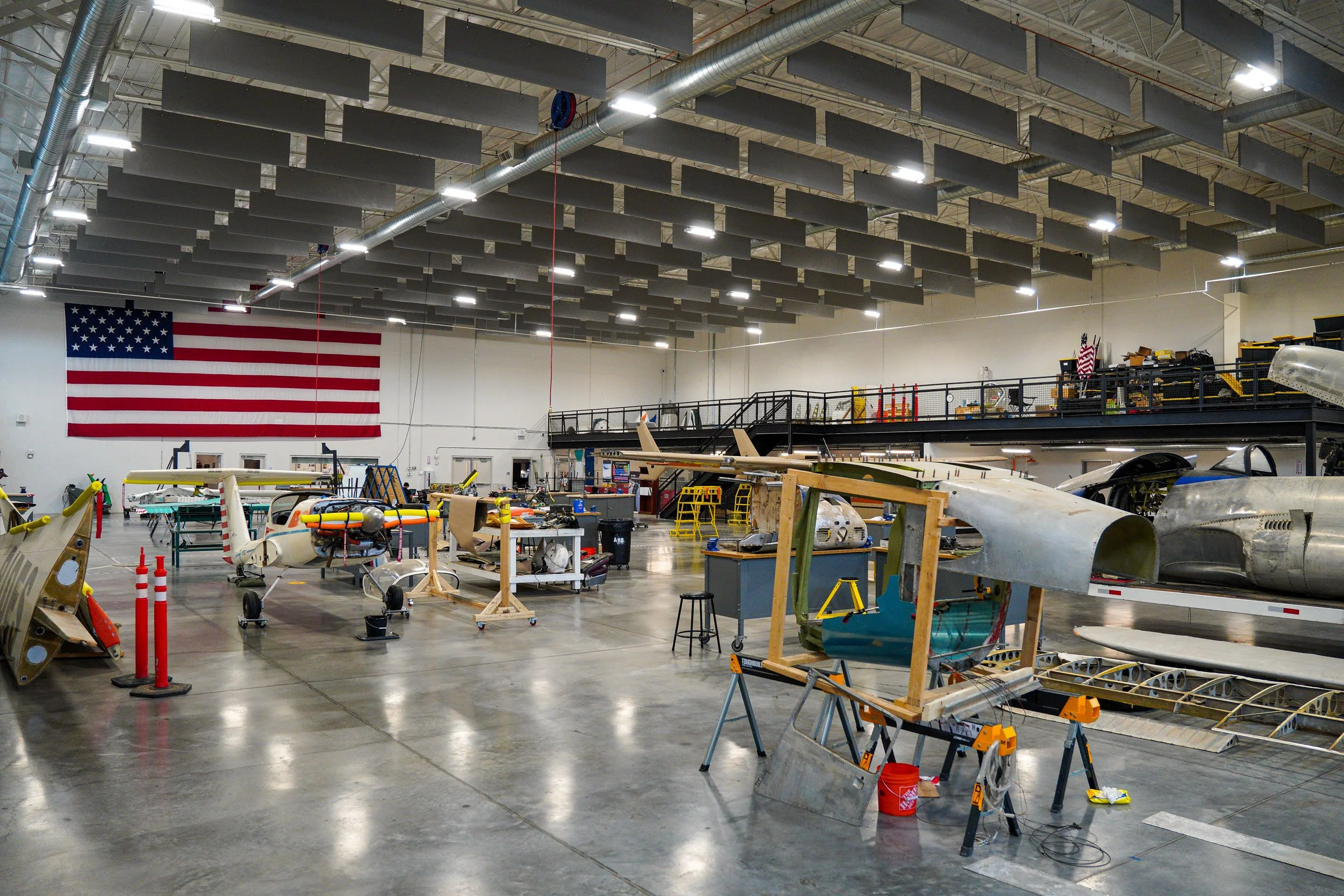
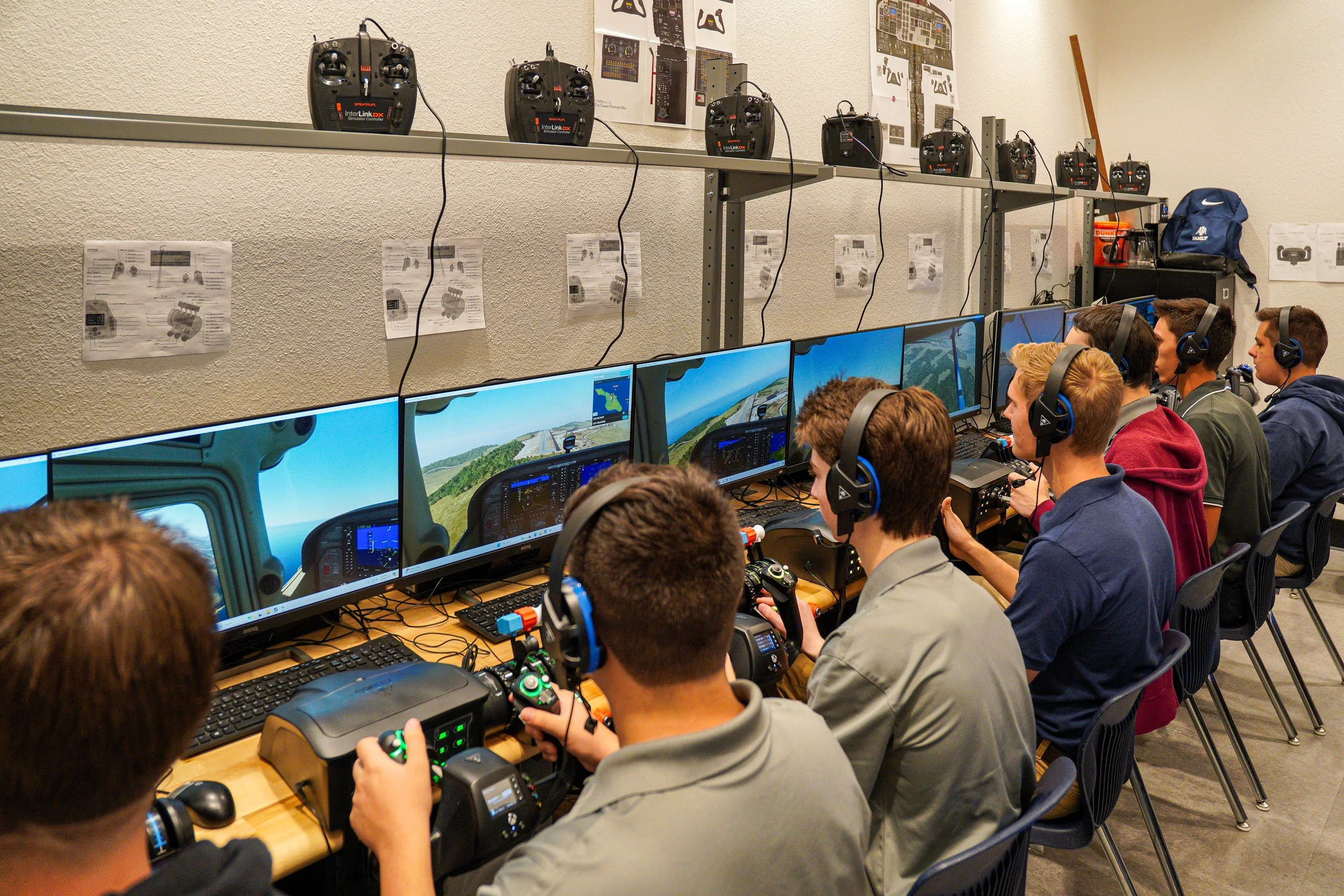
Our Facilities
Frequently Asked Questions (FAQ)
-
It supports that goal, but it also builds strong foundational skills for many aviation maintenance and technical roles.
-
Yes. The program requires both the classroom course and the corresponding lab course.
-
No. Licensure depends on meeting all FAA requirements and passing required exams. The pathway is designed to prepare students for those steps.
-
Consistency, attention to detail, willingness to follow procedures, safe habits, and strong follow-through on documentation.
Our Industry Partners
We collaborate with leading industry professionals to ensure our students gain real-world experience, leading to direct pathways into high-demand careers. We are proud to work alongside organizations that invest in the future of our students.