Construction
PROGRAM OVERVIEW
CONSTRUCTION TECHNOLOGIES
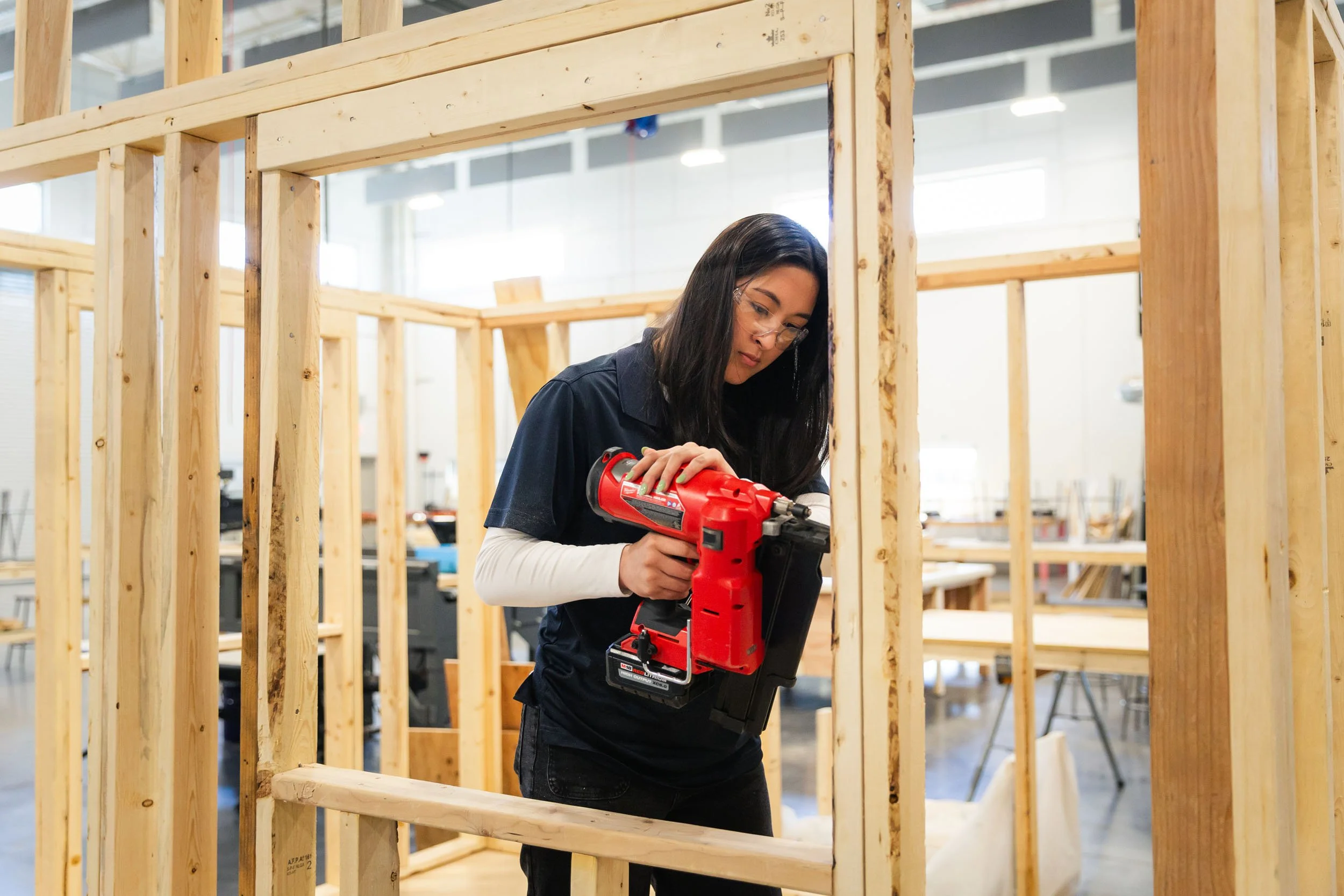
PROGRAM LENGTH: 2-3 years
GRADES: 10-12
Construction is one of the largest career fields in the country—and it needs people who can show up, work safely, read plans, and deliver high-quality results. The Construction Technologies pathway at ALA Applied Technologies is a three-year program where students learn core construction skills across carpentry, residential electrical basics, HVAC fundamentals, plumbing, blueprint reading, site development, and material testing.
This pathway is designed for students who want a clear next step after high school: enter the workforce, move into an apprenticeship, or continue with technical training.
By the end of the program, students will learn skills in:
- Jobsite and workplace safety
- Framing and structural design/fabrication
- Plumbing fundamentals
- Masonry and concrete
- Residential electrical basics
- HVAC system fundamentals
- Blueprint reading and site development
- Practical lab practice tied to classroom instruction
Course Pathway Map
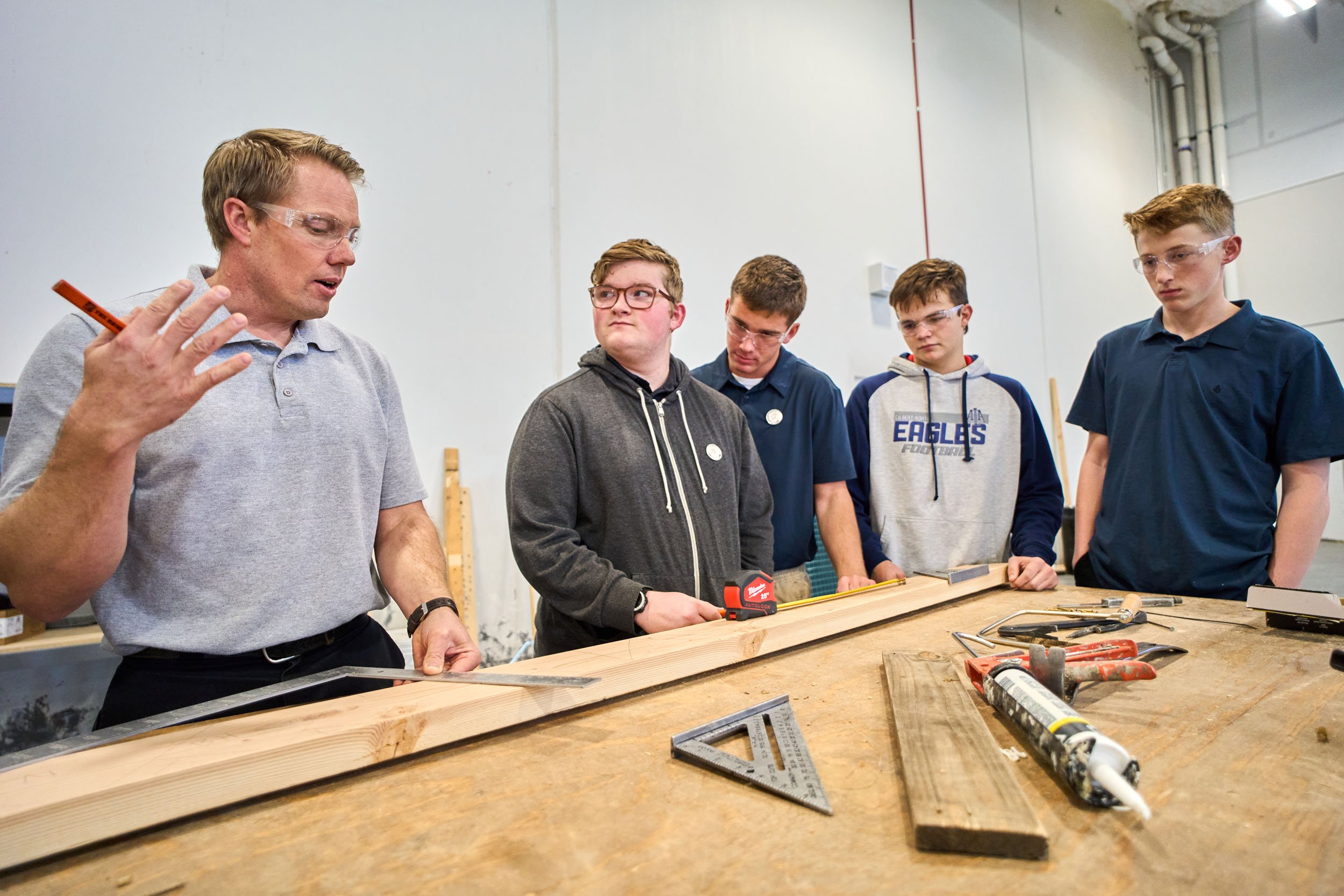
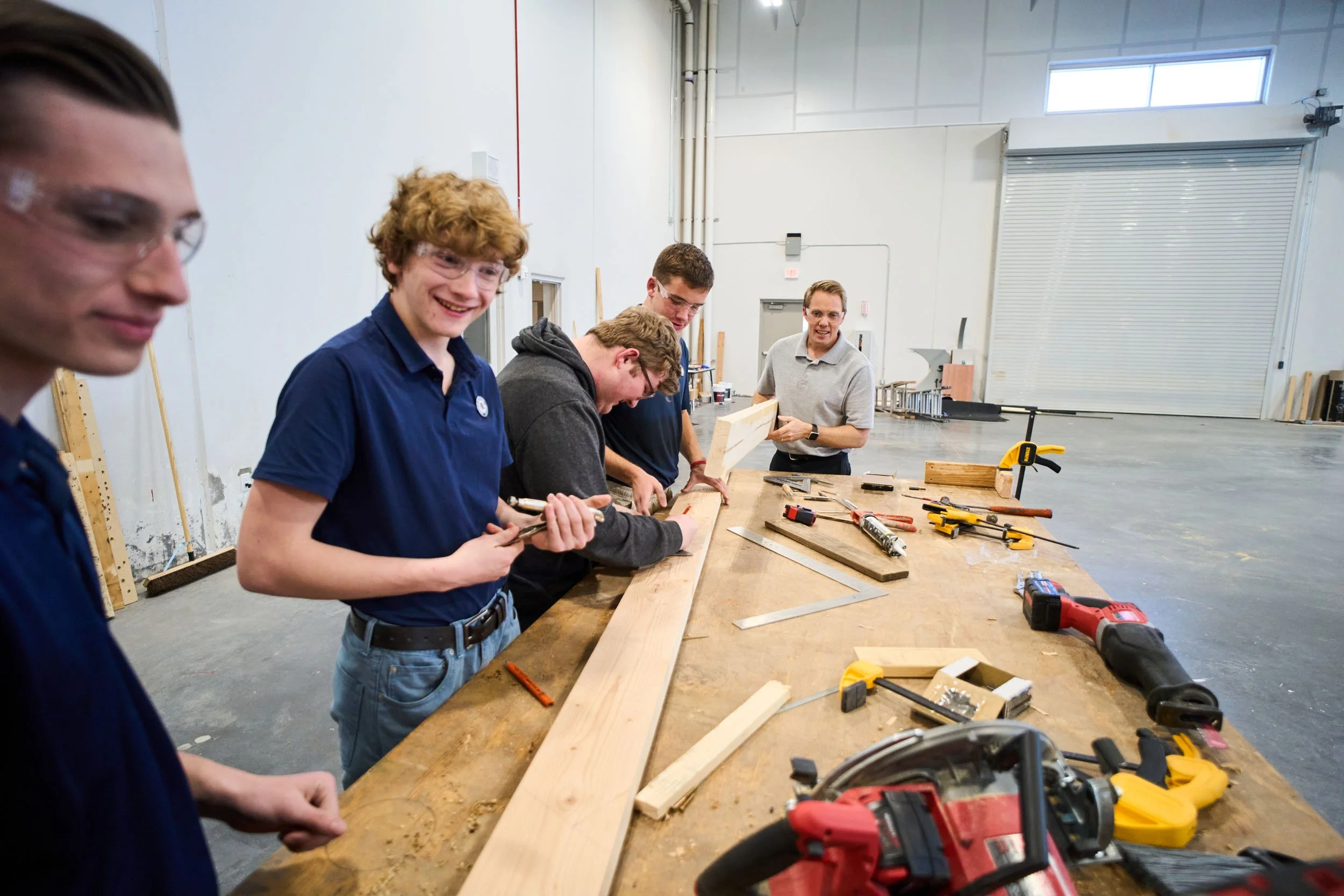
Construction Technologies I provides students with the opportunity to further their knowledge of job and workplace safety, including safety engineering practices. Students study framing and structural design, fabrication, plumbing, masonry, and concrete.
This course also introduces the fundamentals of residential electrical systems and HVAC systems. Students will practice and apply skills learned through real-world lab experiences. Students will receive 2.0 CTE or Elective credits upon completion of this two-semester course (1 credit each semester).
This comprehensive plumbing course equips students with the essential skills needed to become proficient in the plumbing trade. Students learn the safe installation, testing, maintenance, and repair of pipe systems used in residential, commercial, and public buildings.
Emphasis is placed on mathematics, blueprint reading, code compliance, and industry standards. Students gain real-world experience and develop the foundational knowledge required for success in the plumbing field.
Construction Technologies II is an advanced course that builds on the knowledge gained in Construction Technologies I. Students will demonstrate their mastery of construction concepts through the design and construction of various assigned structures.
Emphasis is placed on applying technical skills in real-world scenarios through practical lab work. Students will receive 2.0 CTE or Elective credits upon completion of this two-semester course (1 credit each semester).
In this course, students are provided with additional classroom lab time or on-the-job training for extended hands-on experiences. These real-world activities reinforce the workplace skills necessary to master construction concepts.
Students participate in job preparation training and complete a minimum of 120 hours of fieldwork. Requirements include a portfolio, employer and instructor evaluations, and a final written reflection. Students must provide their own transportation to the internship site.
In this course, students design a project using the fundamentals of project management, conduct research on a selected topic, and produce a final report, portfolio, or presentation that demonstrates their learning.
The capstone project reflects academic accomplishments and demonstrates mastery of construction technologies concepts. Students earn 1.0 CTE or Elective credit upon completion of this two-semester course.
For the most accurate and up-to-date information regarding course offerings, requirements, and descriptions, please refer to the official course catalog.
Certificates & Licenses
Students can earn industry-recognized construction credentials, including OSHA 10-Hour Safety and NCCER Construction I & II. These certifications cover workplace safety, basic and advanced construction skills, and career readiness, preparing students for entry-level jobs and further career growth.
| Certificate Name | Class / Year Obtained | Type | Purpose / Eligibility | Information Covered |
|---|---|---|---|---|
| OSHA 10 Safety Certification | Year 1 | Safety Training Certification | Provides entry-level safety training required for many construction jobs | Workplace safety, hazard recognition, fall protection, PPE, OSHA regulations |
| NCCER Construction I | Year 1 | Industry Certification | Introduces foundational construction skills for entry-level workers | Basic construction safety, tools, construction math, material handling, employability skills |
| NCCER Construction II | Year 2 | Industry Certification | Builds on Construction I with more advanced skills and career readiness | Advanced construction techniques, blueprint reading, rigging, communication, teamwork |
Career, Salary, and Growth Opportunities
Entry
Median
Experienced
NATIONAL ANNUAL SALARY
2024
2034
NATIONAL PROJECTED JOB OUTLOOK
2016
2024
2034
EMPLOYMENT GROWTH (by %)
Construction careers offer students practical opportunities to build skills that lead directly to essential, well-paying work in every community. Roles such as construction manager, carpenter, and electrician provide salaries ranging from about $40,000 to $130,000, with experienced professionals often advancing into leadership and specialized trade positions.
The broader construction and extraction field has a median wage around $58,360 per year ($59,500 average in Arizona), higher than the median for all occupations. Many trades also show steady demand, with average employment projected to grow about 8 percent through 2034, along with tens of thousands of openings annually. For students who enjoy working with their hands, solving real-world problems, and seeing tangible results, construction pathways provide a dependable route to stable, in-demand careers.
*Statistics sourced from U.S. Bureau of Labor Statistics (BLS) and Arizona workforce projections.
Our Facilities
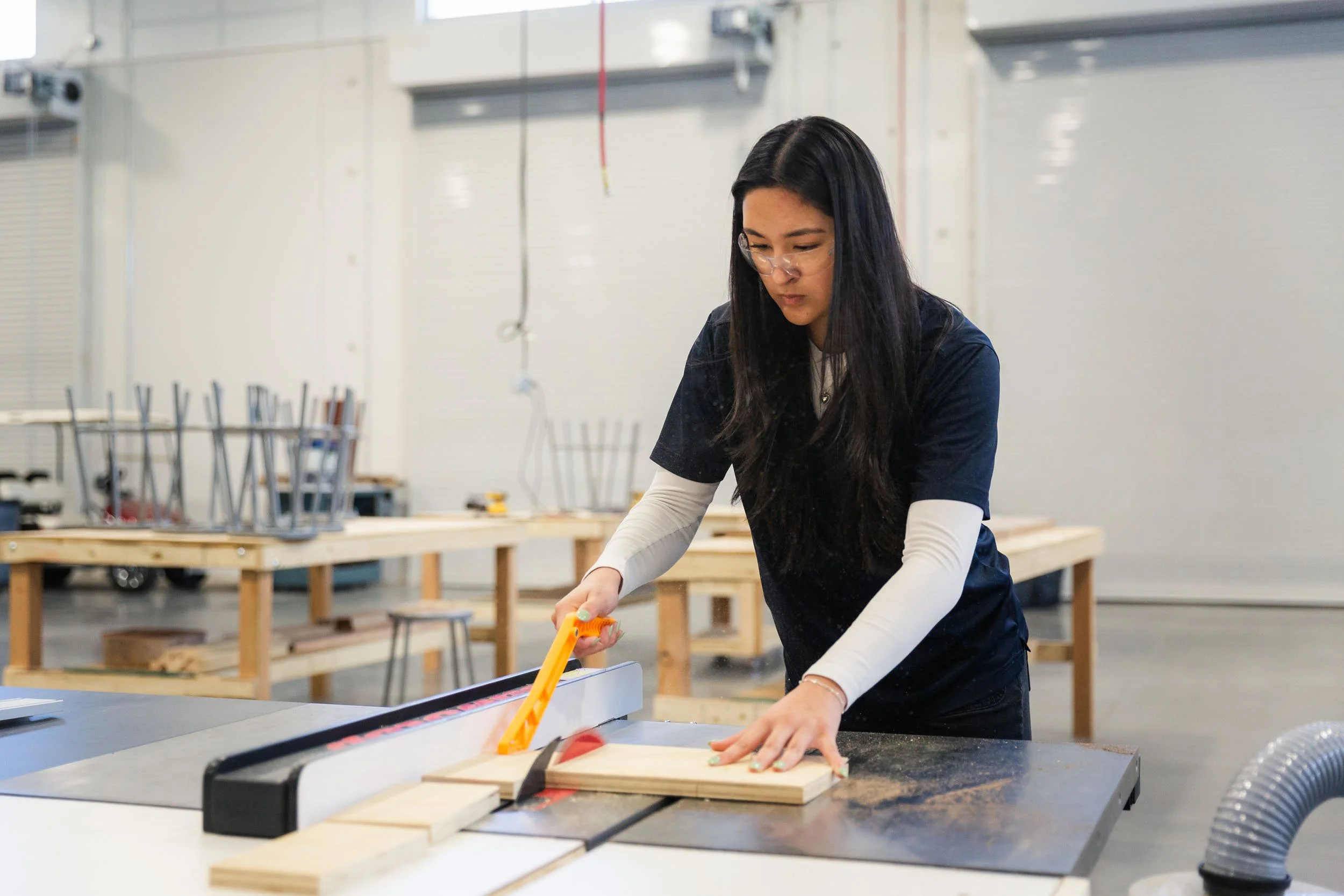
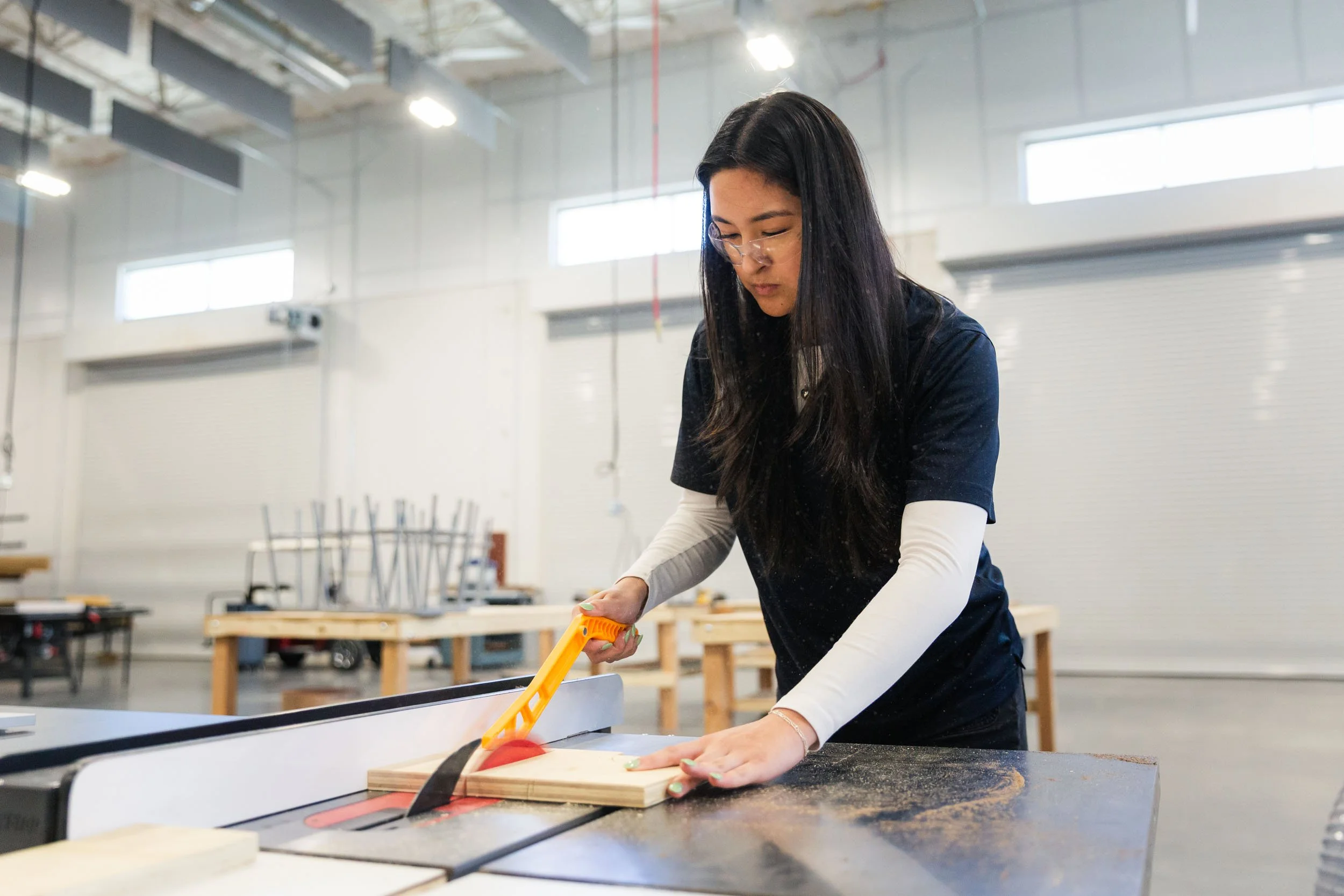
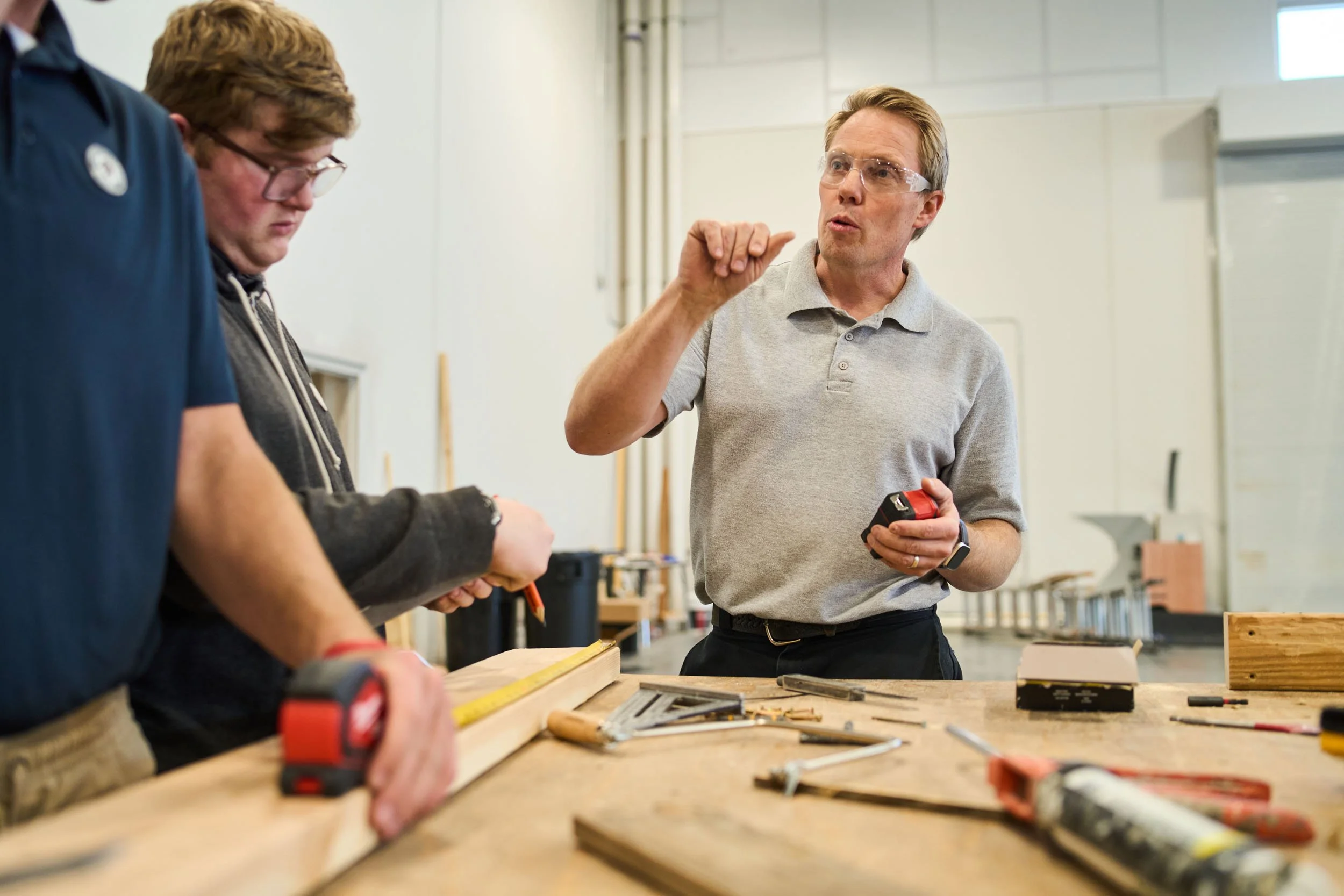
Students train in a comprehensive construction technologies facility designed to mirror real-world job sites and professional workshops. The space provides real-world opportunities to learn carpentry, electrical systems, and building trades using industry-standard tools and equipment.
Our facilities feature:
Main lab floor (130' x 100') with three garage doors for easy access to large projects
East and West classrooms (30' x 20' each) and upper floor workspaces
Electrical lab (30' x 50') and dedicated finishing room
Major equipment including table saws, miter saws, bandsaws, scroll saws, jointers, planers, lathes, router tables, drum and spindle sanders, belt/disc sanders, drill presses, and a wide range of hand and power tools
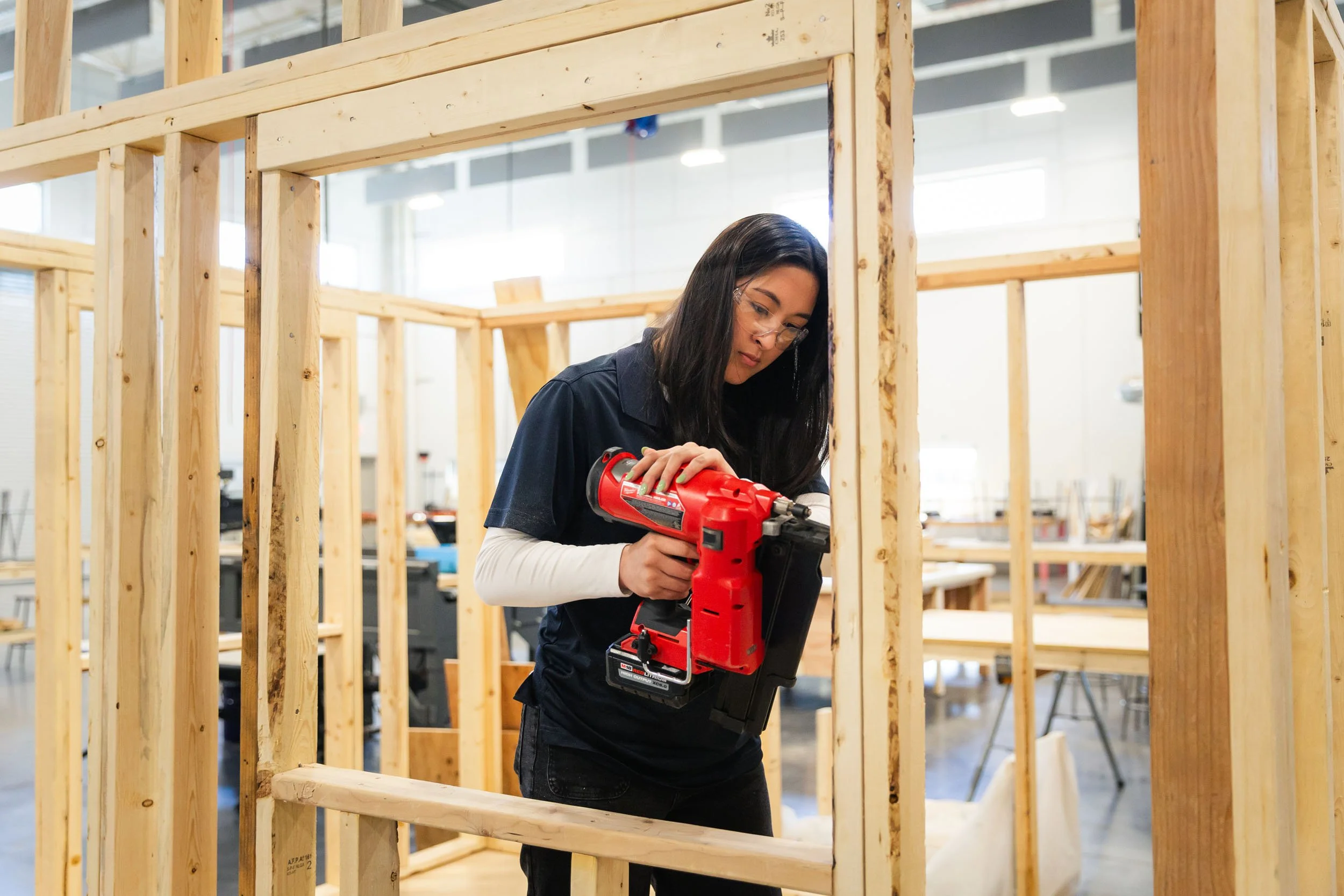
Nail guns (pneumatic, battery, and powder-actuated), acetylene torch, soldering irons, conduit benders, and laser engravers/cutters
Amatrol lab equipment for AC/DC electricity, thermal science, refrigeration systems, and heat pump troubleshooting
OmTech 100W laser engraver/cutters
Frequently Asked Questions (FAQ)
-
No. This pathway introduces students to multiple trade areas (carpentry, electrical, plumbing, HVAC fundamentals, masonry, and more), so they can explore different options before choosing a specialty.
-
It includes both. The catalog specifically notes a lab component and hands-on practice tied to the skills taught in class.
-
Yes. BLS data shows strong demand and solid wages across construction trades, and many of these careers start through apprenticeships, technical training, or on-the-job learning.
-
Yes. The Construction internship course includes job preparation, portfolio work, evaluations, and 120 hours of field work.
-
The capstone is a final project where students create a final report, portfolio, or presentation that shows what they learned.
-
Yes. BLS reports the construction and extraction occupational group has a median wage above the all-occupations median, and many trade roles continue to show strong annual openings.
-
Yes. The Construction Technologies pathway gives students broad exposure to building systems and trade skills, which can help them make a more confident choice before specializing further. The same academy also includes dedicated Welding and HVAC tracks.
Our Industry Partners
We collaborate with leading industry professionals to ensure our students gain real-world experience, leading to direct pathways into high-demand careers. We are proud to work alongside organizations that invest in the future of our students.