HVAC
PROGRAM OVERVIEW
HVAC
PROGRAM LENGTH: 2 Years
GRADES: 11-12
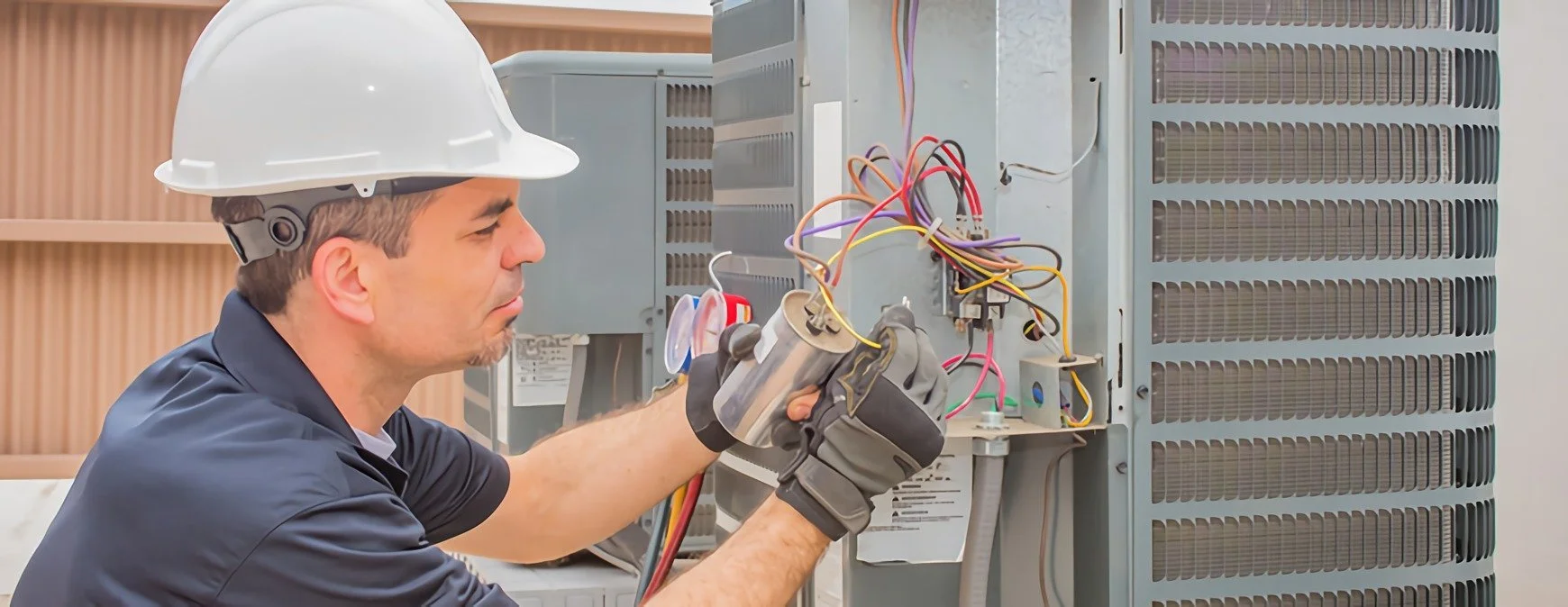
Comfort, safety, and energy efficiency don’t happen by accident. HVAC technicians are the people who keep homes, schools, hospitals, and businesses running by installing and maintaining heating, cooling, and refrigeration systems.
At ALA Applied Technologies, the HVAC pathway is designed for students who want real world, practical skills they can use right away—while still earning their high school diploma. Students learn jobsite safety, tool use, basic electrical concepts, measurement, troubleshooting habits, and the practical steps it takes to diagnose problems and complete quality work.
By the end of the program, students will learn skills in:
- Safety and jobsite expectations
- Tools, materials, and measurement
- Basic electricity concepts used in HVAC systems
- Heating and cooling system fundamentals
- Introductory diagnostics and troubleshooting mindset
- Professional habits: clear communication, documentation, and quality control
Course Pathway Map
This is a two year program that will provide students with an introductory and advanced level instruction into the HVAC industry. Students in the Construction Academy can work toward the industry-recognized NCCER HVAC certification as part of the academy pathway, positioning them for employment opportunities in the dynamic HVAC industry.
HVAC Technologies I is a comprehensive introductory course designed to provide students with a foundational understanding of Heating, Ventilation, and Air Conditioning (HVAC) systems. The course combines theoretical knowledge with practical skills to prepare students for entry into the HVAC industry.
Topics include introduction to HVAC systems, basic electricity, heating and cooling systems, air distribution, copper and plastic piping, soldering and brazing, and carbon steel piping practices. Students will also develop practical technical skills through lab-based activities.
HVAC Technologies II is an advanced course that builds upon the foundation established in HVAC Technologies I. Students deepen their understanding of HVAC systems and explore more specialized technologies and applications.
Topics include hydronic systems, air quality equipment, fiberglass and sheet metal duct systems, chimneys and vents, system maintenance, heat pumps, metering devices, leak detection, refrigerants, compressors, and alternating current systems.
Upon successful completion, students will earn an NCCER HVAC certification, preparing them for employment opportunities in the HVAC industry. Hands-on lab experiences continue to reinforce technical skills.
For the most accurate and up-to-date information regarding course offerings, requirements, and descriptions, please refer to the official course catalog.
Certificates & Licenses
Upon successful completion of the program, students will be awarded an NCCER HVAC certification, positioning them for employment opportunities in the dynamic HVAC industry. In HVAC, a common next step after training is earning the EPA Section 608 certification, which is required for technicians who work with regulated refrigerants.
| Certificate Name | Class / Year Obtained | Type | Purpose / Eligibility | Information Covered |
|---|---|---|---|---|
| OSHA 10 Safety Certification | Year 2 | Safety Training Certification | Provides entry-level safety training required for many HVAC and trade jobs | Workplace safety, hazard recognition, fall protection, PPE, OSHA regulations |
| NCCER HVAC 5E - Level 1 | HVAC Technologies I with Lab | Industry Certification | Introduces foundational HVAC skills for entry-level technicians | Basic safety, tools, refrigeration principles, HVAC systems, basic troubleshooting |
| NCCER HVAC - 5E Level 2 | HVAC Technologies II with Lab | Industry Certification | Builds on Level 1 with more advanced HVAC skills | Advanced HVAC systems, electrical controls, ductwork, diagnostics, customer service |
Career, Salary, and Growth Opportunities
Entry
Median
Experienced
NATIONAL ANNUAL SALARY
2021
2022
2024
MEDIAN SALARY GROWTH
2024
2034
NATIONAL PROJECTED JOB OUTLOOK
HVAC careers are growing faster than other occupations nationwide, with strong demand for skilled technicians capable of working on advanced climate-control systems. Wages vary based on experience, certifications, and specialty, with median pay around $58,820/year in the Phoenix–Mesa–Chandler area, $59,810/year nationally, and the highest 10% earning more than $91,020/year. (BLS 2025)
By earning industry-recognized certifications through our program, students gain a head start in the HVAC field, demonstrating both technical skills and workplace safety knowledge that employers value.
*Statistics sourced from U.S. Bureau of Labor Statistics (BLS) and Arizona workforce projections.
Our Facilities
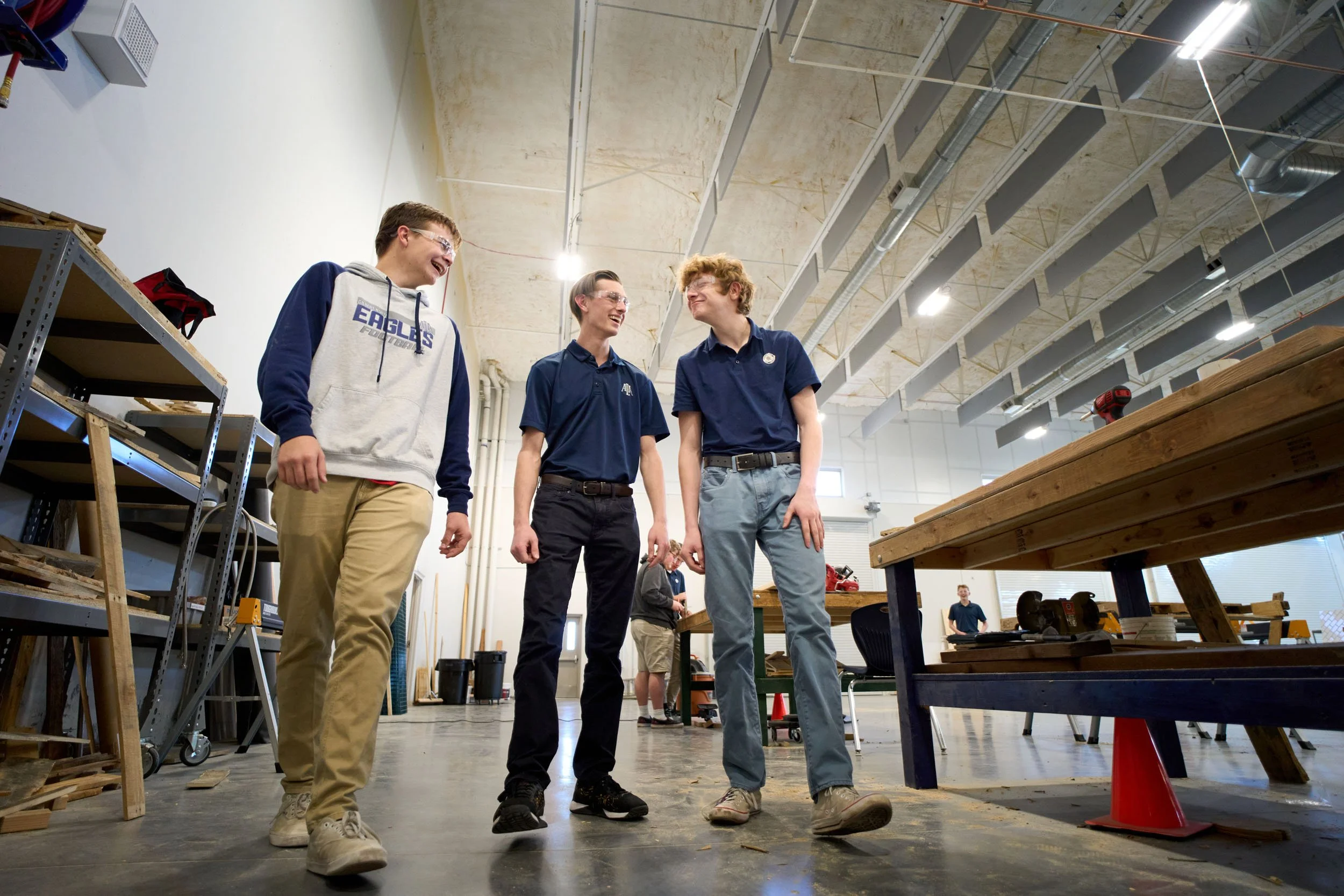
Students train in a comprehensive construction technologies facility designed to mirror real-world job sites and professional workshops. The space provides real-world opportunities to learn carpentry, electrical systems, and building trades using industry-standard tools and equipment.
Our facilities feature:
Main lab floor (130' x 100') with three garage doors for easy access to large projects
East and West classrooms (30' x 20' each) and upper floor workspaces
Electrical lab (30' x 50') and dedicated finishing room
Major equipment including table saws, miter saws, bandsaws, scroll saws, jointers, planers, lathes, router tables, drum and spindle sanders, belt/disc sanders, drill presses, and a wide range of hand and power tools
Nail guns (pneumatic, battery, and powder-actuated), acetylene torch, soldering irons, conduit benders, and laser engravers/cutters
Amatrol lab equipment for AC/DC electricity, thermal science, refrigeration systems, and heat pump troubleshooting
OmTech 100W laser engraver/cutters
Frequently Asked Questions (FAQ)
-
HVAC stands for Heating, Ventilation, and Air Conditioning. It’s the trade focused on installing, maintaining, and repairing systems that control comfort, airflow, and temperature in homes and commercial buildings.
-
Students learn safety, tools, measurement, basic electrical concepts used in HVAC systems, how heating and cooling equipment works, and how to troubleshoot problems in a step-by-step way. Expect hands-on practice and real shop expectations around quality and professionalism.
-
No. The pathway is designed for beginners. The focus is building fundamentals first, then adding complexity as students progress.
-
A common next step is EPA Section 608 certification, which is required for technicians who work with regulated refrigerants. Many students also pursue entry-level industry credentials through their pathway training.
-
HVAC and refrigeration overlap. Refrigeration is often a specialization (restaurants, grocery stores, cold storage). The pathway builds a foundation that can lead toward refrigeration roles with additional training and experience.
-
Typical entry points include HVAC installer helper, maintenance assistant, or junior service technician roles. With experience and credentials, students can grow into commercial HVAC, refrigeration, controls/building automation, facilities maintenance, testing & balancing, or commissioning roles.
-
Both. Some students go straight into entry-level work or apprenticeships. Others continue into trade school, community college, or manufacturer training. The pathway is meant to keep multiple doors open.
Our Industry Partners
We collaborate with leading industry professionals to ensure our students gain real-world experience, leading to direct pathways into high-demand careers. We are proud to work alongside organizations that invest in the future of our students.